
Series · Raising Dharmic Americans
Part 2 of 5The Dharmic Home:
Five Daily Practices That Anchor Your American Family
A Dharmic home is not a museum of heritage. It is a living rhythm — small, daily acts that quietly build the character of your child.
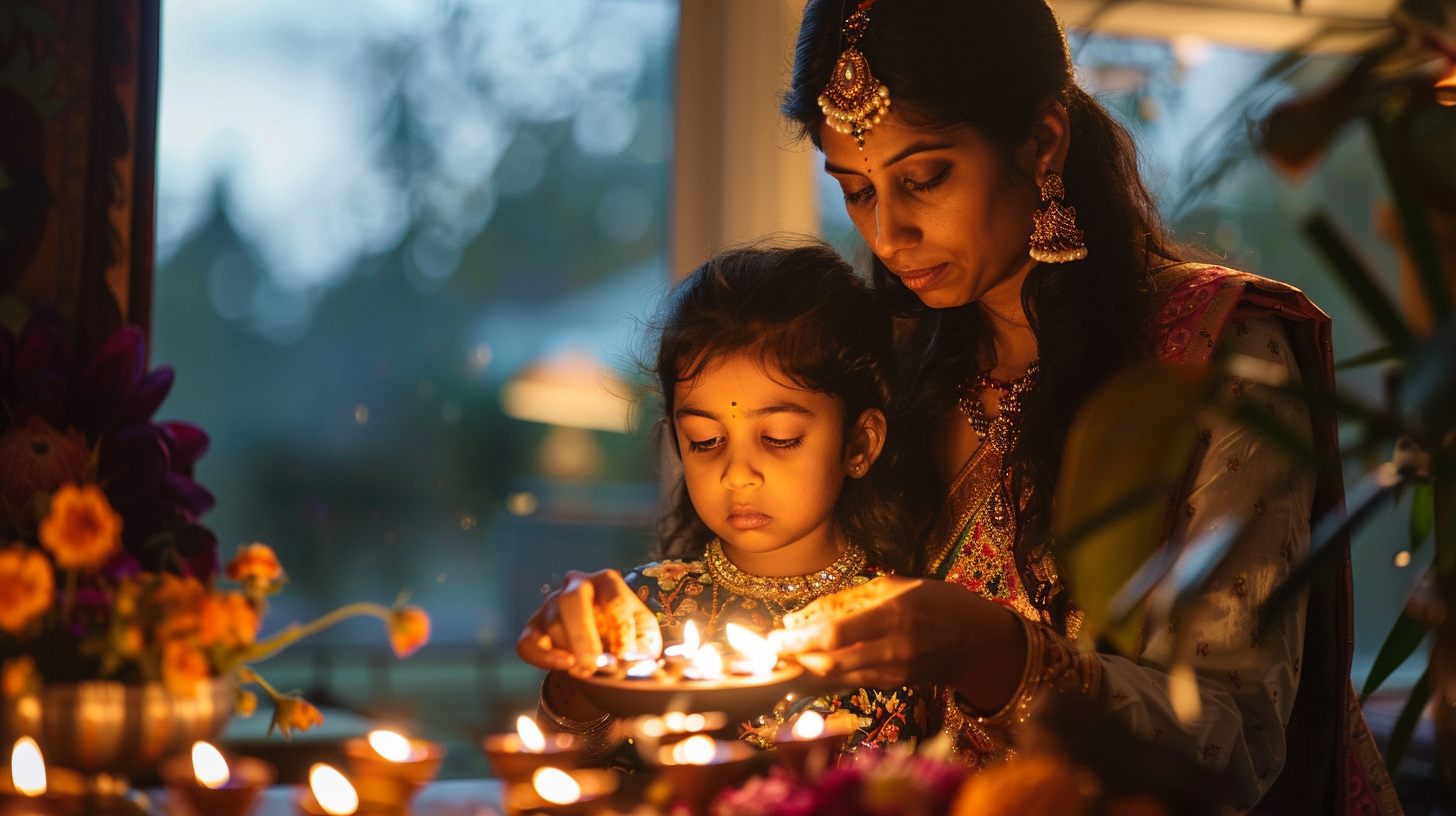
Every Dharmic home is built one morning lamp at a time.
Every culture raises its children through repetition. The bedtime routine, the dinner table ritual, the morning habit — these are not mere logistics. They are the invisible architecture of character. What a child does every day is what they become. Dharma has always known this. The question for Hindu American families is not whether to build a daily rhythm, but which rhythm — and how to weave it into a life that is unmistakably, proudly American.
If you have a puja room, let it be the beating heart of your home. If you are still building toward one, a lamp and a moment of stillness will do the same work. Five practices — each adaptable, each profound — done consistently, will give your child something no school can: a self that knows where it stands.
"A Dharmic home is built not in one grand gesture but in a thousand small ones — the lamp lit at dawn, the shloka whispered at night, the meal offered before it is eaten."
Practice One
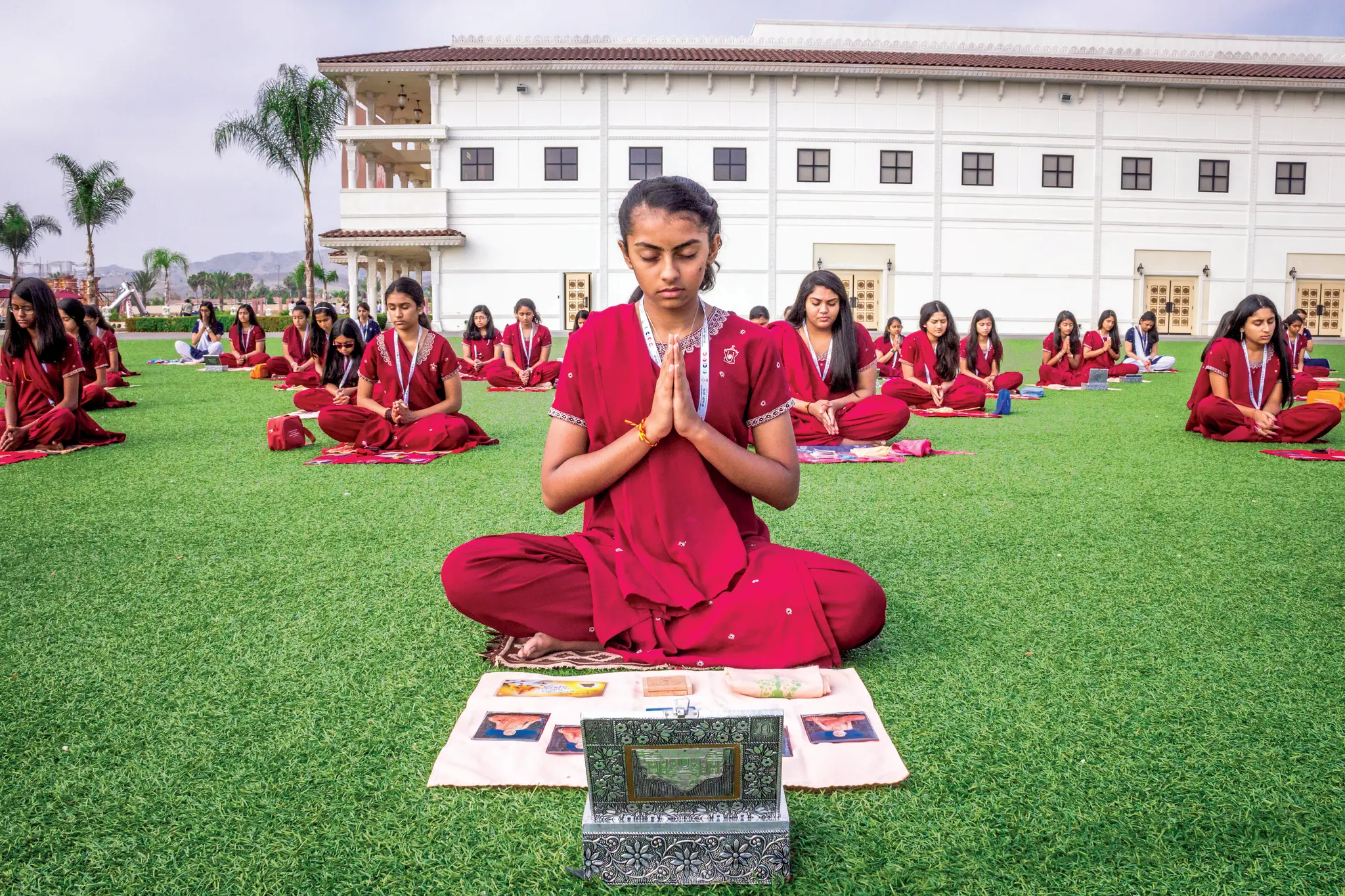
Before the day takes — we offer.
The day that begins with intention begins differently. A simple morning puja — a lamp, a flower, a moment of stillness before the school bag is picked up — teaches children that life is not purely transactional. Before we take from the day, we offer something to it. This single habit, practiced across years, builds a quality that every American parent wants in their child: gratitude that is not performative but instinctive.
You do not need to replicate the full rituals of a temple. A small altar with a murti or image, a diya or electric lamp, and a moment of folded hands is enough. Let your child light the lamp. Let them ring the bell if you have one. Let the act belong to them, not just to you.
Practice Two
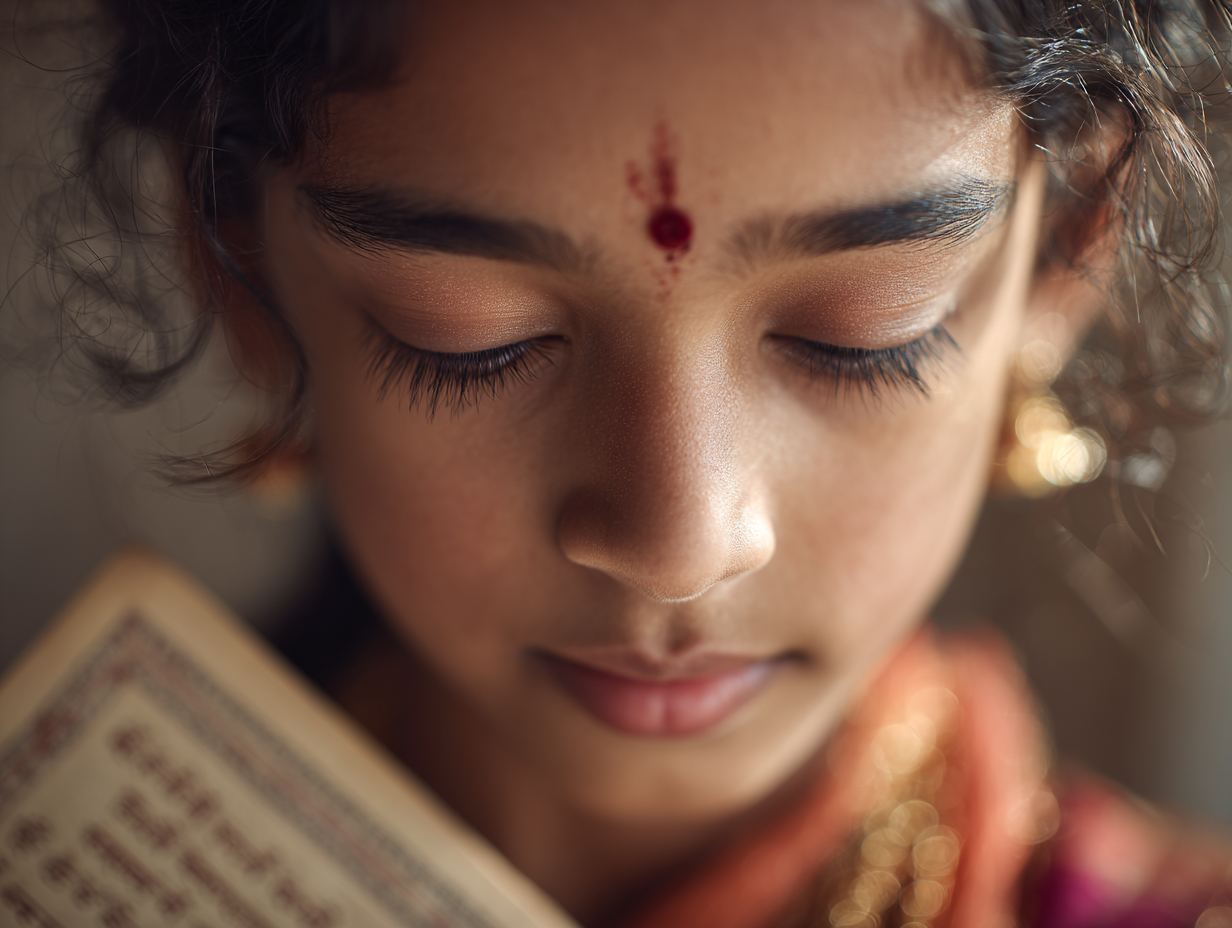
Ancient words, living in a young voice.
Language carries identity. When a child can recite even one shloka — the Gayatri Mantra, the Saraswati Vandana, a verse from the Gita — they carry something ancient inside them, something no cultural pressure can easily dislodge. Mantra is not superstition. It is neuroscience dressed in Sanskrit: the repetition of sound with meaning and breath builds focus, memory, and a felt sense of continuity with something larger than the self.
Start with one. Just one. Learn it together as a family if you have to. Understand its meaning in English before worrying about perfect pronunciation. The meaning, internalized, is what does the work.
Practice Three
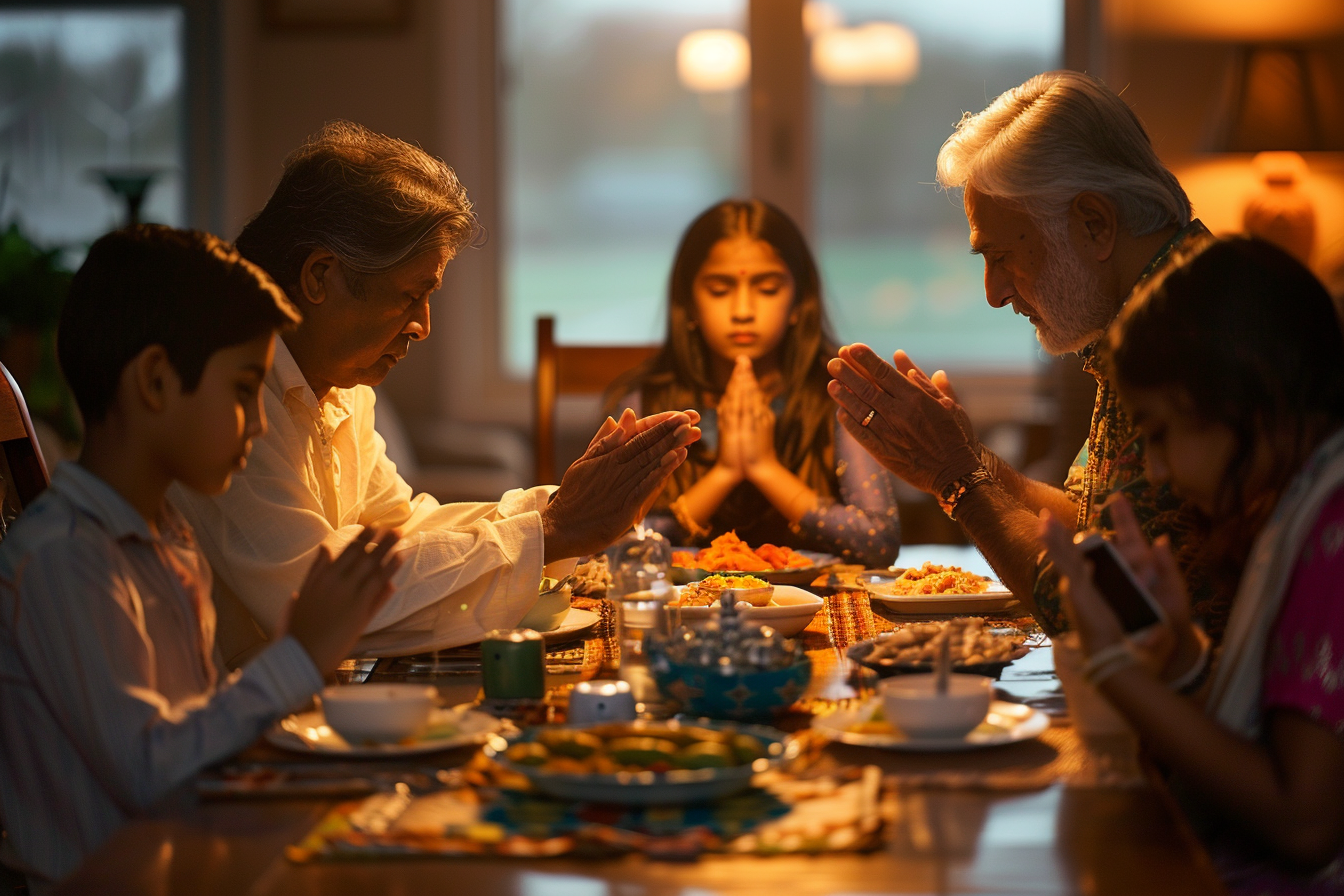
The table where gratitude is practiced — every single evening.
Dharma has a profound relationship with food that has nothing to do with dietary restriction and everything to do with intention. Sattvic eating — food that is fresh, thoughtfully prepared, and offered before consuming — teaches children that eating is not merely fueling. It is participation in a cycle of gratitude. The simple act of saying a brief prayer or expressing thanks before a meal, of acknowledging where food comes from, shapes a child's relationship with consumption, with the natural world, and with family itself.
The family dinner table is one of the most Dharmic spaces an American home can have. Protect it. Eat together as often as possible. Turn the phone face down. Offer a moment before the first bite — whatever form that takes in your family.
Practice Four
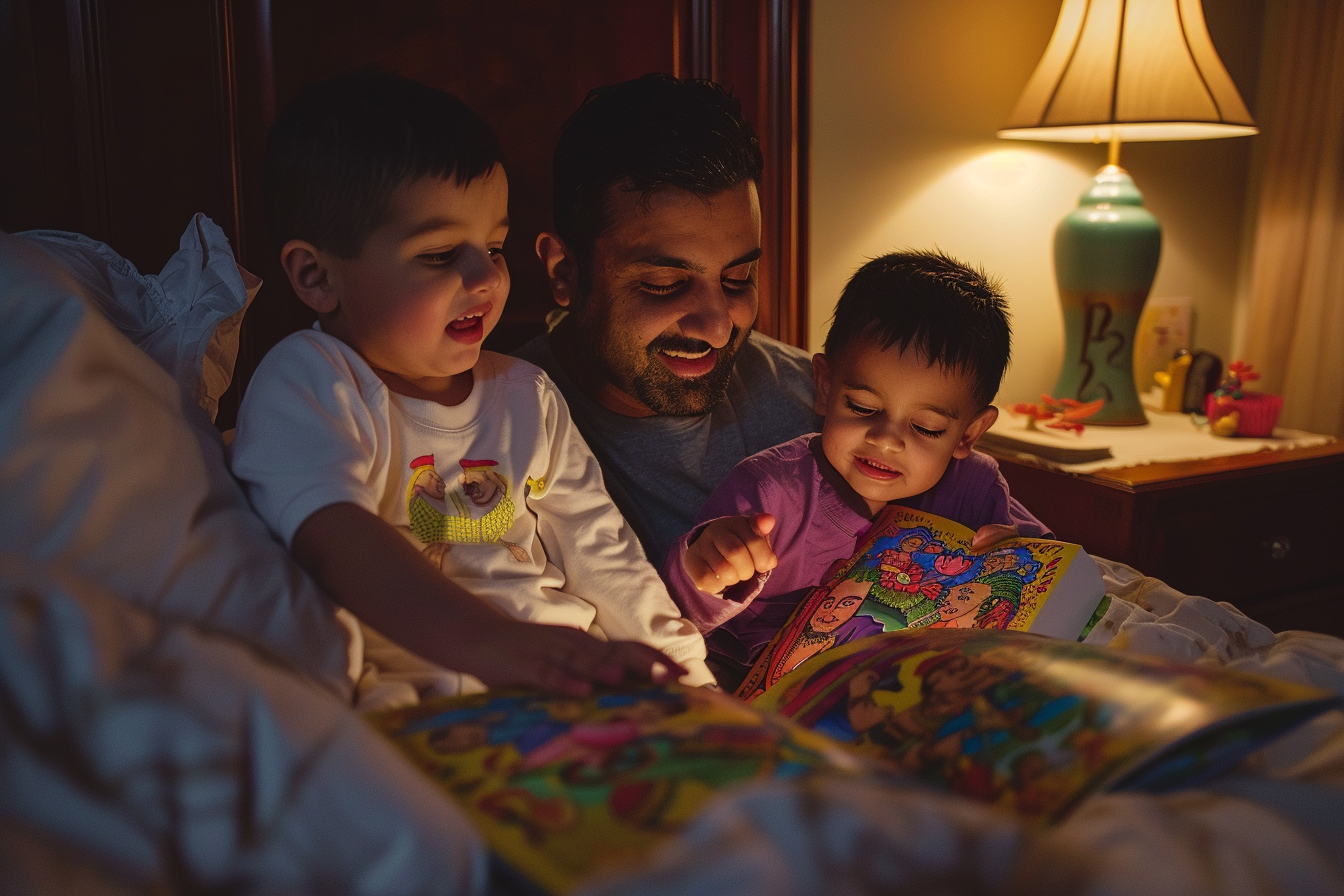
The stories children fall asleep with become the stories they live by.
The stories a child falls asleep with become the stories they live by. Hindu scripture is not a set of rules — it is one of the world's greatest collections of moral and philosophical narrative. The Ramayana, the Mahabharata, the Panchatantra, the Bhagavatam — these are not ancient texts gathering dust. They are alive with characters who face the same dilemmas your child will face: loyalty versus self-interest, courage versus safety, truth versus convenience.
Reading these stories at bedtime does something that a lecture on values never can — it plants the seed in the imagination, where it will grow quietly and emerge when your child needs it most. You do not need the original Sanskrit. Beautiful illustrated editions and age-appropriate retellings abound.
Practice Five
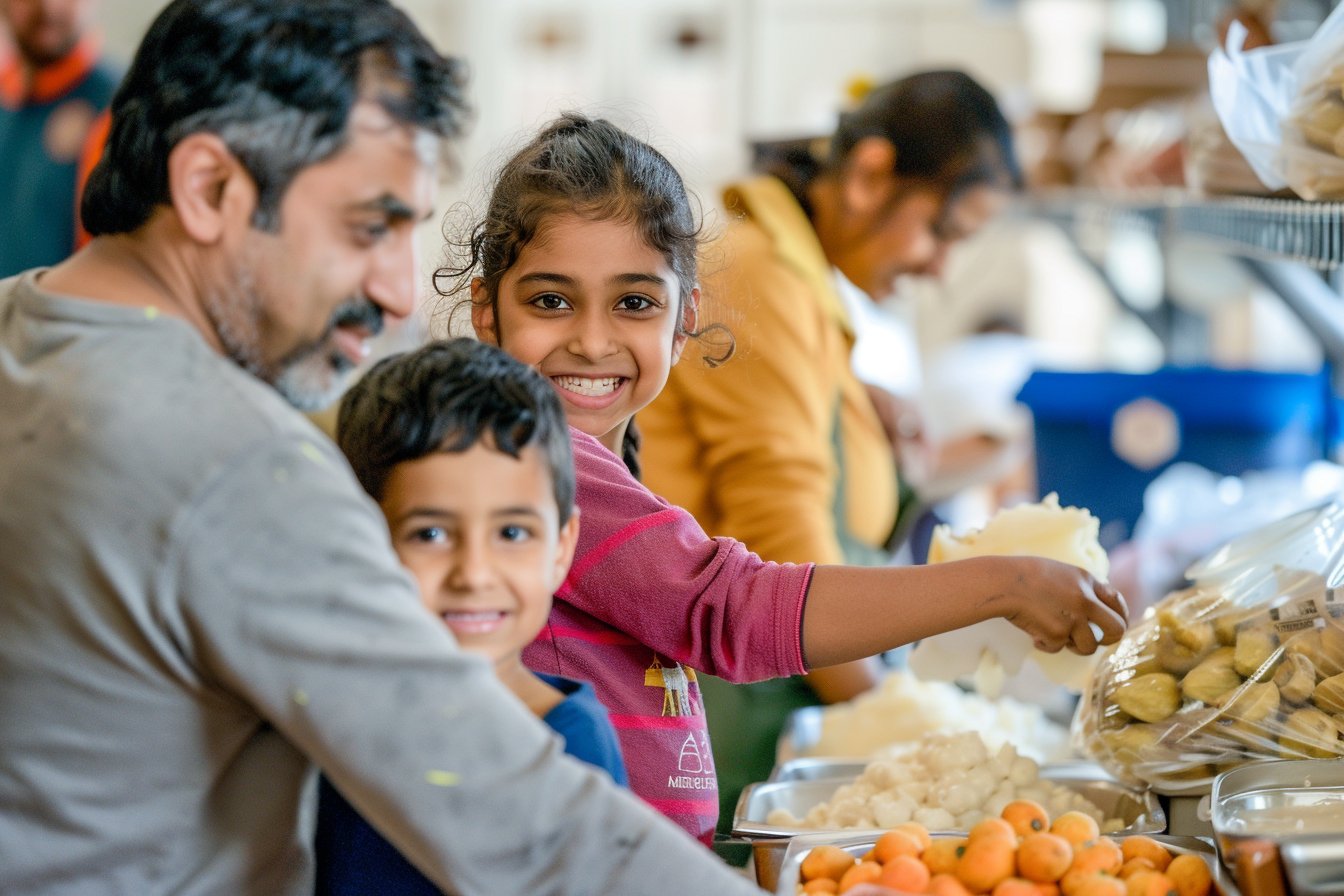
Seva — where Dharmic values and American citizenship meet.
Of all five practices, seva may be the most powerfully American — and the most purely Dharmic. The idea that we exist in relationship with our community, that our prosperity carries an obligation to serve, is at the heart of both traditions. When Hindu American families volunteer together — at a food bank, a community cleanup, a temple langar, a neighborhood drive — they are practicing karma yoga. They are also raising children who understand that being American means contributing to something beyond the self.
Seva is also the most natural bridge between your child's Hindu identity and their American peers. Service is a language everyone speaks. A child who has grown up serving has confidence, perspective, and a generosity of spirit that no amount of academic achievement can produce on its own.
Putting it together
A sample Dharmic daily rhythm
These five practices do not need to happen every day in full. Think of this not as a checklist but as a palette — you draw from it differently on a Tuesday morning than on a Sunday. Below is a sample rhythm for a family with school-age children. Adapt it entirely to your own life.
"You are not preserving a culture. You are growing a person — one who will carry something ancient into a future that needs it."
Raising Dharmic Americans — full series
Part 2 · Now reading
The Dharmic Home — five daily practices