
Series · Raising Dharmic Americans
Part 1 of 5Rooted to Rise:
How Dharmic Values Raise Stronger, Prouder Americans
Your child's Hindu heritage isn't a tension to manage — it's a foundation to build on.
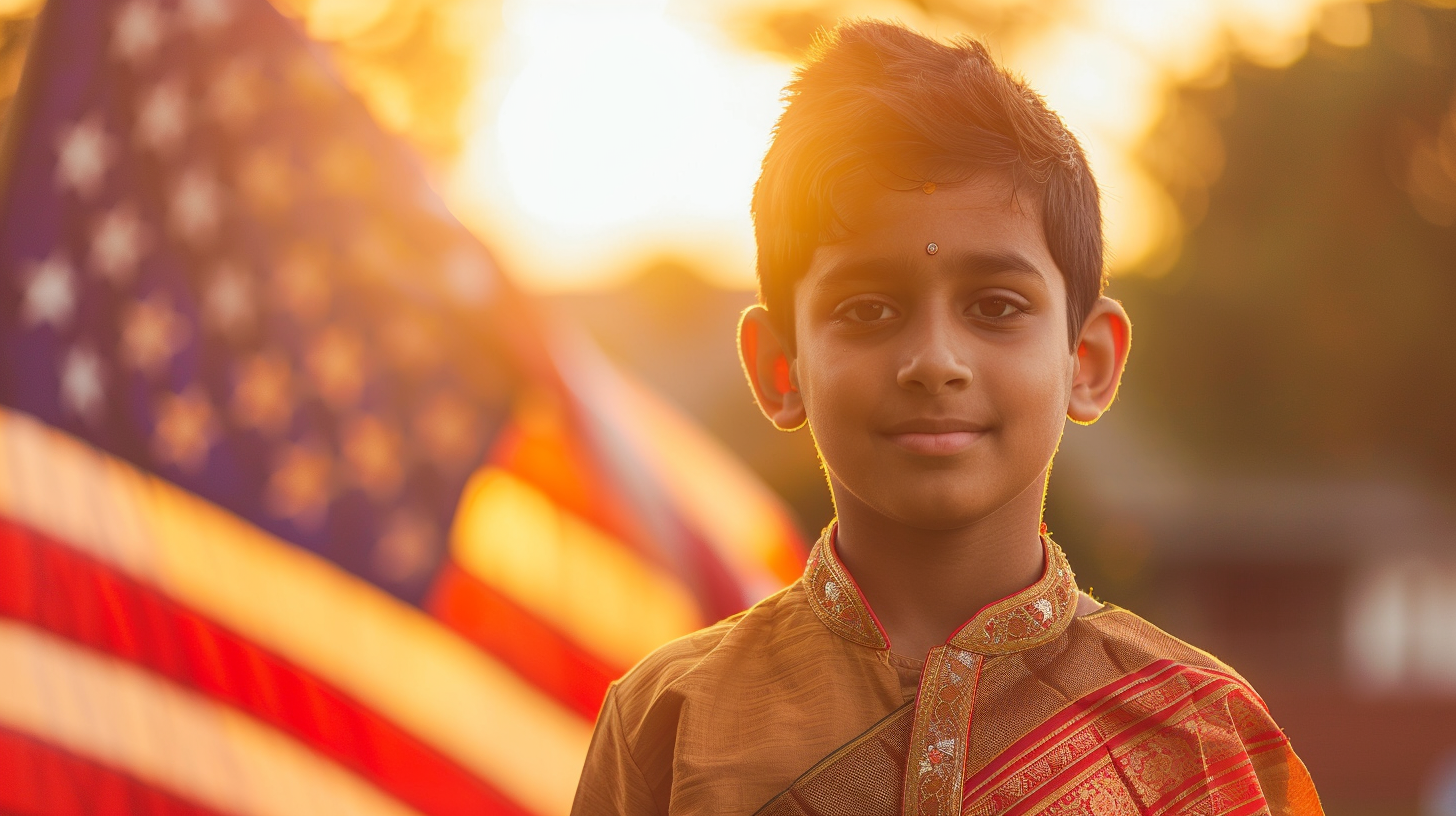
Growing up with two roots — and standing taller because of both.
Your child comes home from school one afternoon and asks a question that stops you mid-breath: "Am I American or Indian?" Maybe they are eight years old. Maybe they are fifteen. Maybe it happens during a history unit, or after a comment from a classmate, or quietly, at the dinner table, after a particularly spirited Diwali at home. However it arrives, the question lands with weight — because you know they are really asking something deeper: Who am I? And where do I belong?
For millions of Hindu American families — whether they arrived from Mumbai in the 1990s or were born in Minneapolis to parents who did — this moment is not hypothetical. It is inevitable. And how we meet it matters enormously, not just for our children, but for America itself.
"The goal is not to produce children who are confused about their identity — it is to raise Americans who know exactly who they are and why it matters."
This series is for every Hindu American parent navigating that question. Whether you lit agarbatti this morning before school dropoff, or you have not opened the Ramayana in years but feel a quiet pull to pass something forward — these articles are for you. They are for the first-generation parent who walked away from everything familiar to give their child a future, and for the second-generation parent who is now asking: what do I actually want to give them?
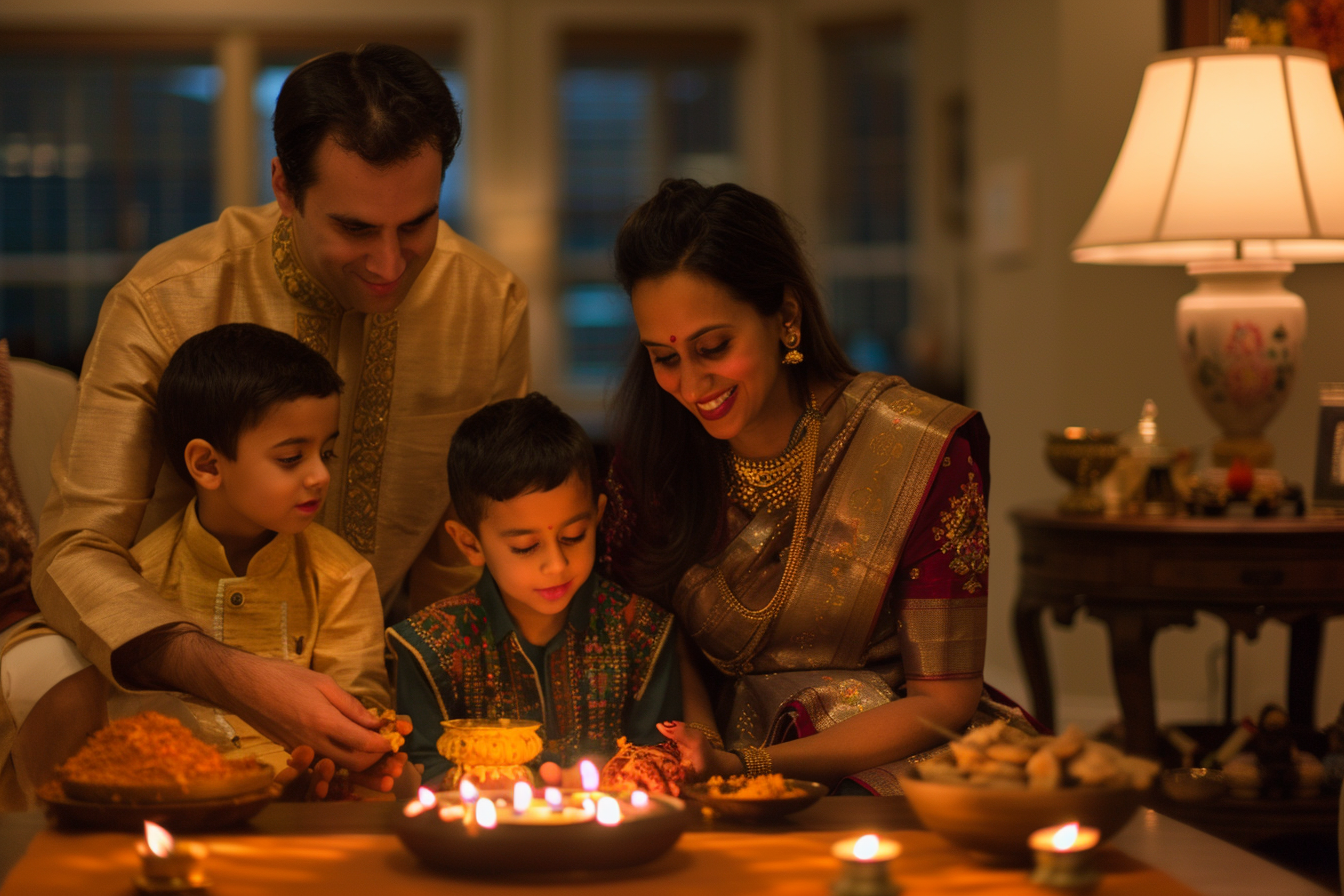
The diya and the dinner table — two anchors of the same home.
Why this conversation is urgent
America needs what Dharma already teaches
There is something remarkable about raising children in the United States. This country was founded on ideals that, at their best, mirror some of the oldest wisdom in the world: that every human being carries inherent dignity, that the pursuit of knowledge and righteousness is sacred, that civic life demands courage and sacrifice. The American experiment, at its most aspirational, is not so different from the Dharmic vision of a just and harmonious society.
This is not a coincidence to explain away — it is a foundation to build on.
Hindu Dharma does not ask us to retreat from the world. It asks us to engage it fully, with clarity, with discipline, and with a sense of purpose rooted in something larger than the self. When we raise children with that grounding, we are not making them less American. We are making them better citizens — more resilient, more thoughtful, more anchored against the currents of a culture that can too easily untether the young.
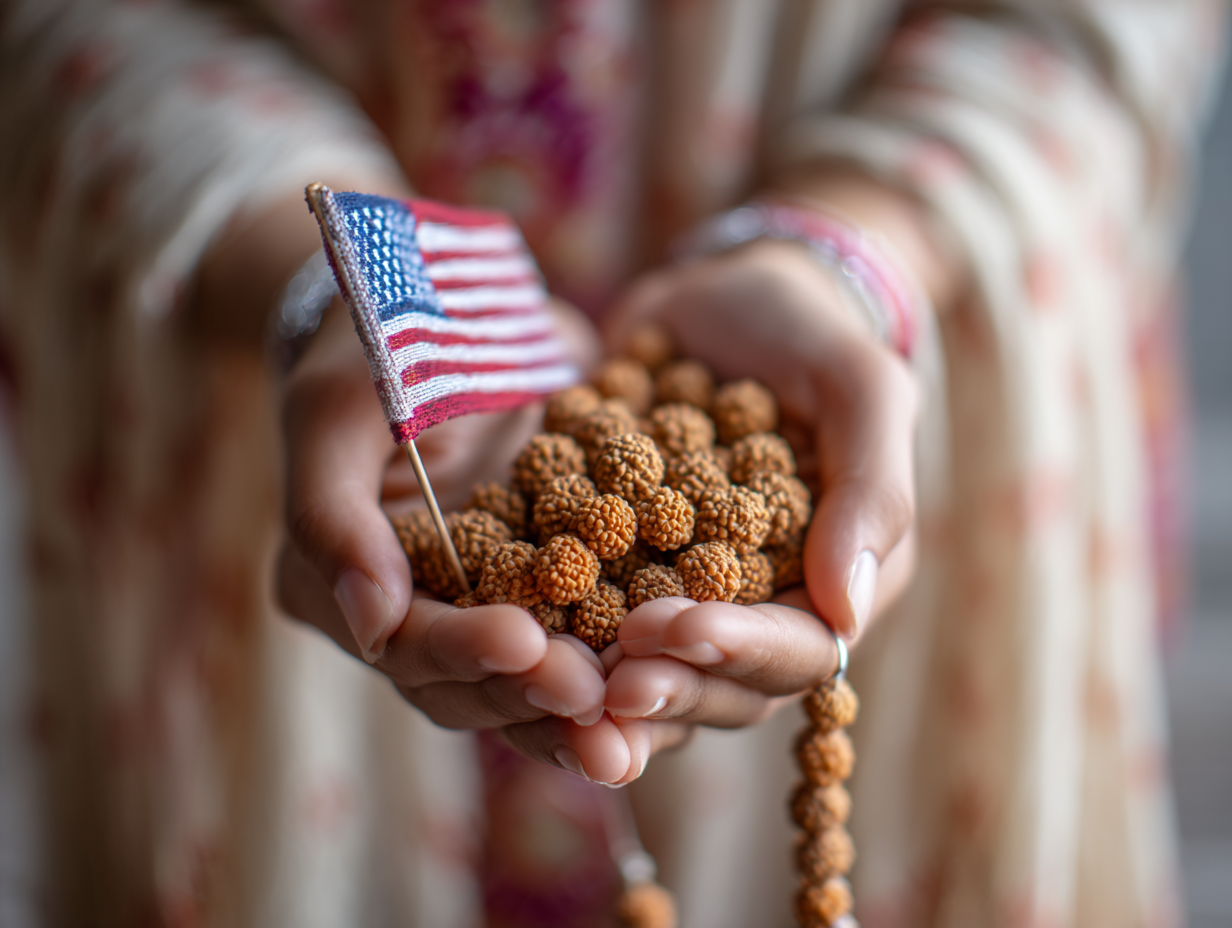
Two symbols, one pair of hands — identity is never either/or.
"National pride and Dharmic confidence are not opposing loyalties. They are, at their best, the same impulse — to serve something greater than yourself."
What this series covers
Five conversations every Hindu American family should have
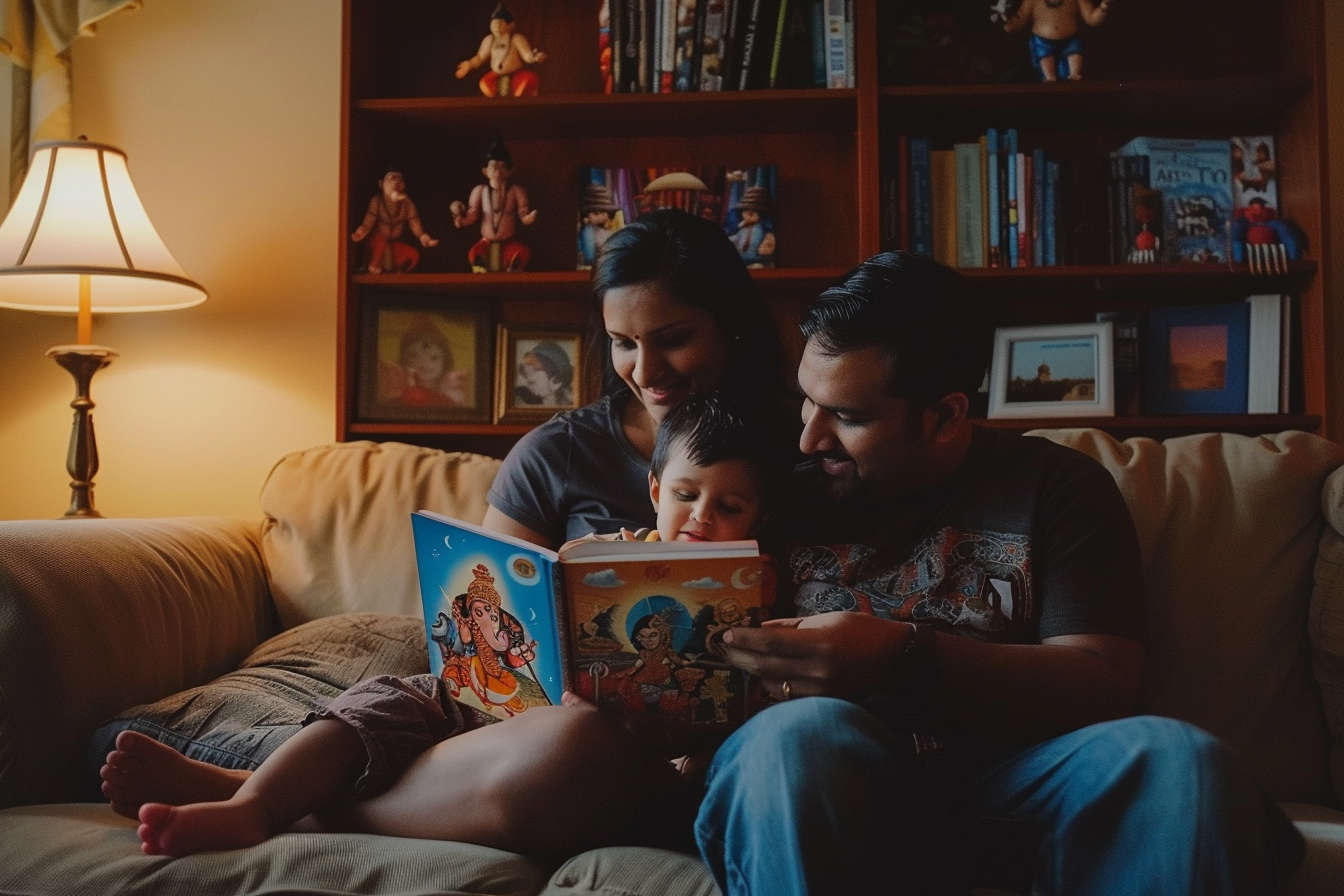
Passing the story forward — one page, one evening at a time.
Over the next five articles, we will go deep on the practical and philosophical questions that define Hindu American parenting today. We will not offer a one-size-fits-all script — Dharma is too alive for that. But we will offer frameworks, practices, and stories grounded in lived experience and timeless wisdom.
Each piece stands alone, but together they form a map — for the family that wants to raise children who love this country and know their heritage, who can recite the Pledge of Allegiance with their hand on their heart and also understand why we light a lamp before we begin anything important.

Their roots run deep — and their future runs wide open.
Coming up in this series
Part 1 · Now reading
Rooted to Rise — series introduction