
Series · Raising Dharmic Americans
Part 3 of 5When Your Child Asks "Am I Hindu?"
Raising Kids Who Answer With Confidence
The moments that feel hardest — a classmate's question, a teacher's raised eyebrow, a friend's joke — are actually the moments your child's identity is being forged. Here is how to make sure it forges strong.

Confidence is not something you perform. It is something you build — one conversation at a time.
It happens in a cafeteria, on a school bus, in a gym locker room, or right in the middle of a December classroom covered in snowflakes and tinsel. Someone asks your child — directly or indirectly — about their faith, their family, their god, their food, their name. And in that moment, before they have the words or the confidence to answer, something quiet and important either holds or wobbles. That something is identity.
No parent can be in that cafeteria. But every parent can do the work beforehand — the slow, patient, joyful work of building a child who knows who they are so deeply that the question, when it comes, does not unsettle them. It interests them. It gives them something to say.
This article is about giving your child exactly that: not a rehearsed defense of Hinduism, but a living confidence — rooted in pride, grounded in knowledge, and warm enough to invite curiosity rather than shut it down.
"A child who knows who they are does not experience questions about their identity as attacks. They experience them as invitations."
The foundation
Before the script — the three things your child must feel
No amount of clever answers will substitute for these three felt convictions. They are the soil in which confidence grows. If your child has them, they will find their own words. If they do not, no script will hold under pressure.
The three felt convictions of a confident Hindu American child
Challenge One

Belonging rooted in identity — not dependent on fitting in.
Feeling different is one of the most powerful forces in a young person's life — and one of the most Dharmic opportunities a parent has. The child who learns to stand comfortably in their difference, without aggression or apology, is developing exactly the inner strength that Dharma calls sthitaprajna — a steady, unshakeable self.
The goal is not to make your child indifferent to belonging. It is to give them a source of belonging that does not depend on being like everyone else. Their family, their faith community, their own inner life — these are the anchors that make peer pressure navigable rather than overwhelming.
What to say — by age
Ages 6–10
"Being different is actually a superpower. Our family has something special — a really old, really wise way of living. Not everyone has that, and that's okay. It makes us interesting."
Ages 11–13
"I know it can feel awkward when you're the only one who does things differently. But think about this — the most interesting people you'll ever meet are the ones who know who they are. That's what we're building in you."
Ages 14–18
"Peer pressure is real and I'm not going to pretend it isn't. But here's what I want you to know: a faith that has lasted five thousand years has done so because it is true and deep, not because it was popular. You don't need to defend it. You just need to know it well enough to own it."
Challenge Two
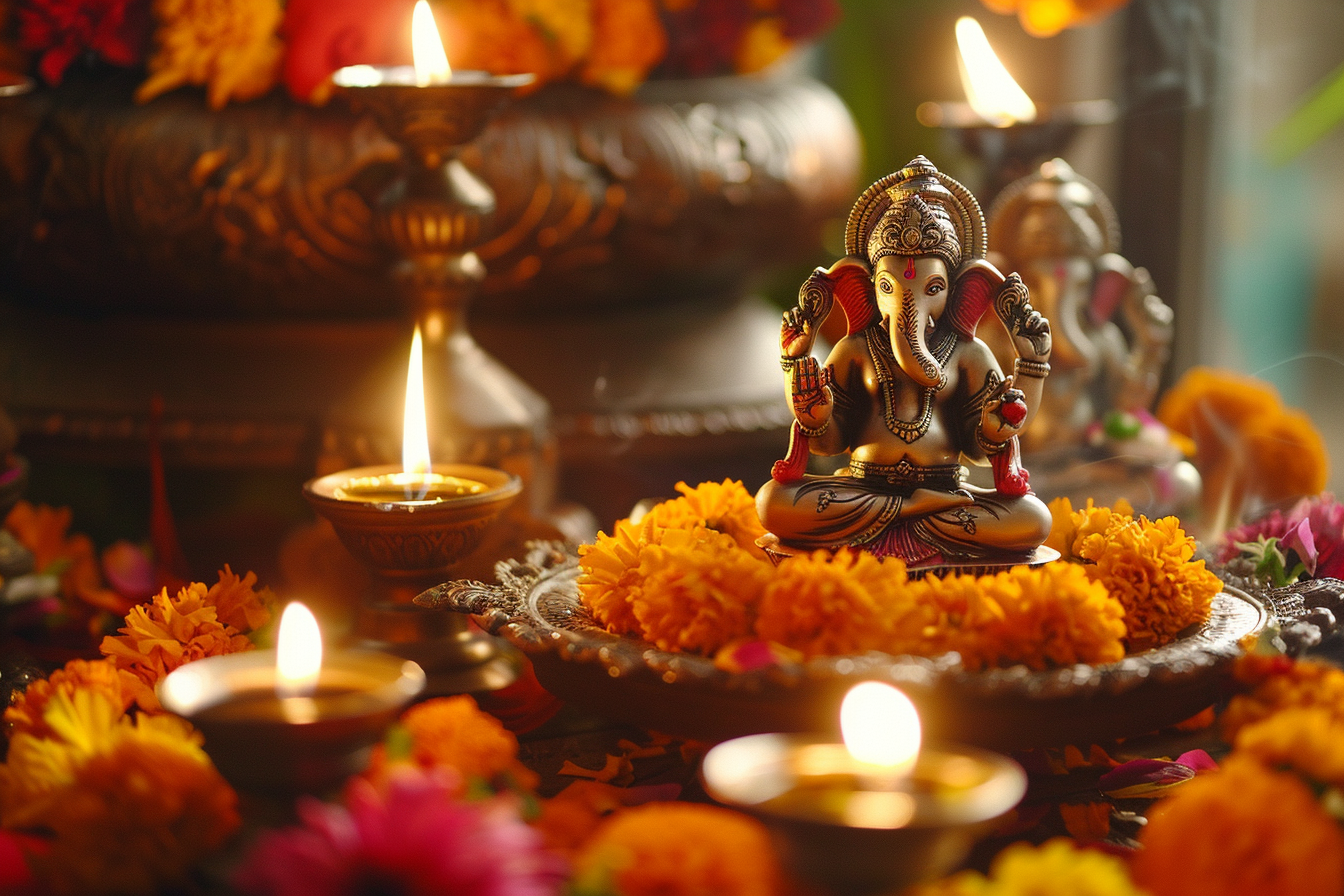
Not idols — windows. Each murti a different door into the same infinite truth.
"Why do you worship statues?" "Do you really believe in many gods?" These are among the most common questions Hindu American children face — and among the most misunderstood aspects of Dharma. The answer is not defensive. It is one of the most philosophically sophisticated responses any child could give.
Hinduism does not worship idols. It uses murti — physical forms — as focal points for meditation on the infinite. And the many deities of Hinduism are not competing gods but different expressions of one ultimate reality, approached through different qualities and relationships. This is not confusion. It is wisdom so deep that most world philosophies are still catching up to it.
What to say — by age
Ages 6–10
"The murti helps us think about God the same way a photo of someone you love helps you feel close to them. We know God is everywhere — the murti just gives us a beautiful place to look."
Ages 11–13
"We don't worship the statue itself — we use it as a window. And our different gods aren't really different gods — they're like different doors into the same enormous truth. Ganesha, Lakshmi, Shiva — they each teach us something different about the universe and ourselves."
Ages 14–18
"Hinduism is actually one of the most philosophically sophisticated approaches to the divine in human history. The idea that one infinite reality can be approached through many forms — that's not primitive. That's profoundly inclusive. Most ancient traditions worship one face of God. We acknowledge that the infinite has infinite faces."
Challenge Three
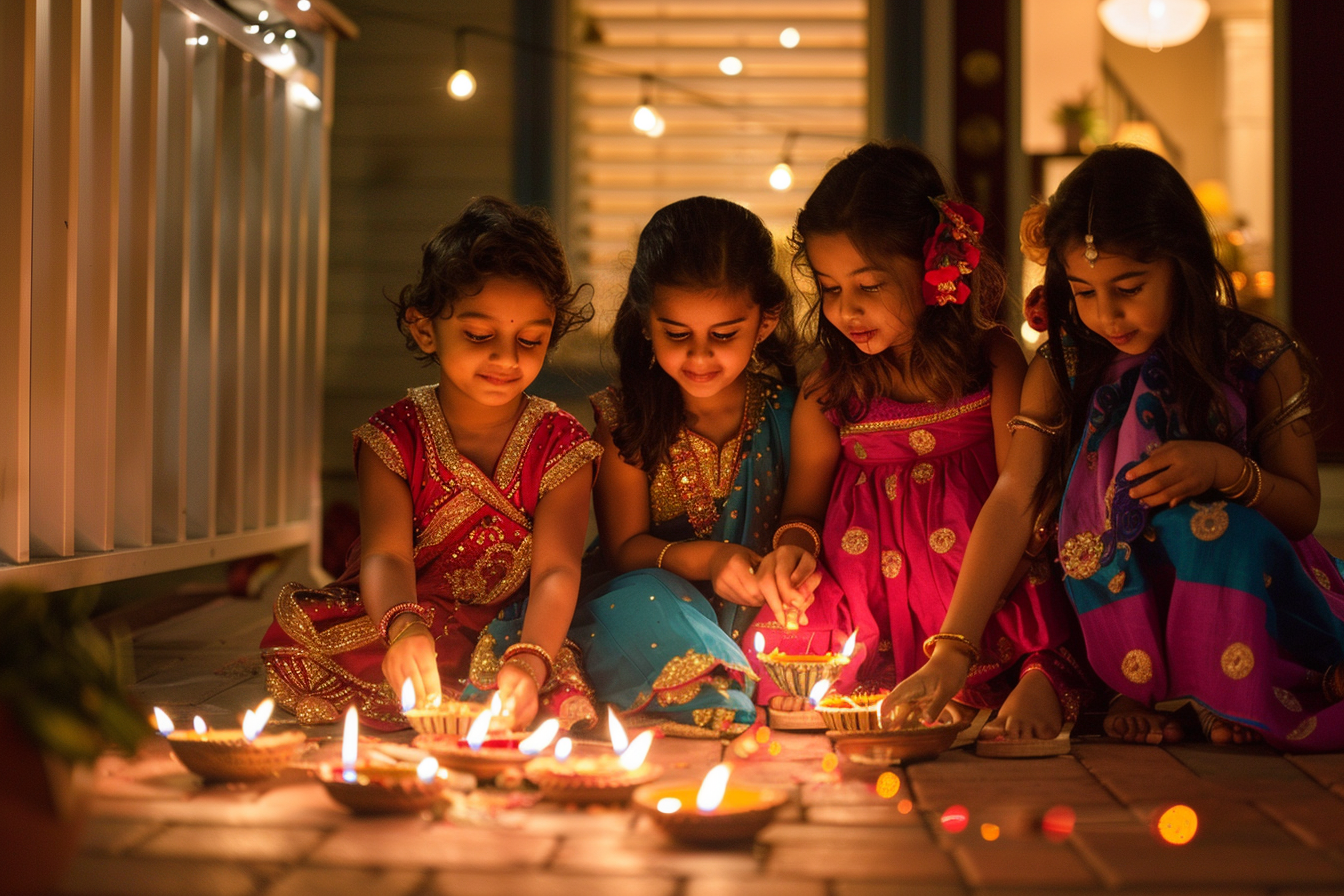
We do not have less celebration. We have a whole calendar full of it.
This question arrives reliably every December, and it is not really about Christmas. It is about belonging. Your child is not asking for a theology lesson — they are asking whether they are missing out, whether their family's way is somehow less than, whether they will be left outside the warmth of something everyone else seems to share.
The answer has two parts: first, affirm the feeling — belonging matters, and it is natural to want it. Second, redirect to abundance — your family does not have less. It has more. Diwali, Holi, Navratri, Janmashtami, Ganesh Chaturthi — the Hindu calendar is one of the most festival-rich in the world. Your child is not missing celebrations. They are swimming in them.
What to say — by age
Ages 6–10
"We celebrate Diwali — the Festival of Lights — and it is even more magical than Christmas. We have lights everywhere, sweets, new clothes, and fireworks. And we have so many more celebrations through the year. We are lucky!"
Ages 11–13
"I understand it feels like everyone else is doing something together that we're not part of. But think about it — our family has Diwali, Holi, Navratri, and so many more. We are not missing out on celebration. We have a whole calendar full of it. And we can still enjoy the spirit of the season without making it our religious holiday."
Ages 14–18
"Every faith has its seasons of joy and reflection. Ours are extraordinary — Diwali celebrates the victory of light over darkness, Holi is an explosion of color and renewal, Navratri honors the divine feminine for nine nights. These are not lesser celebrations. They are ancient, profound, and ours. Own them."
Challenge Four
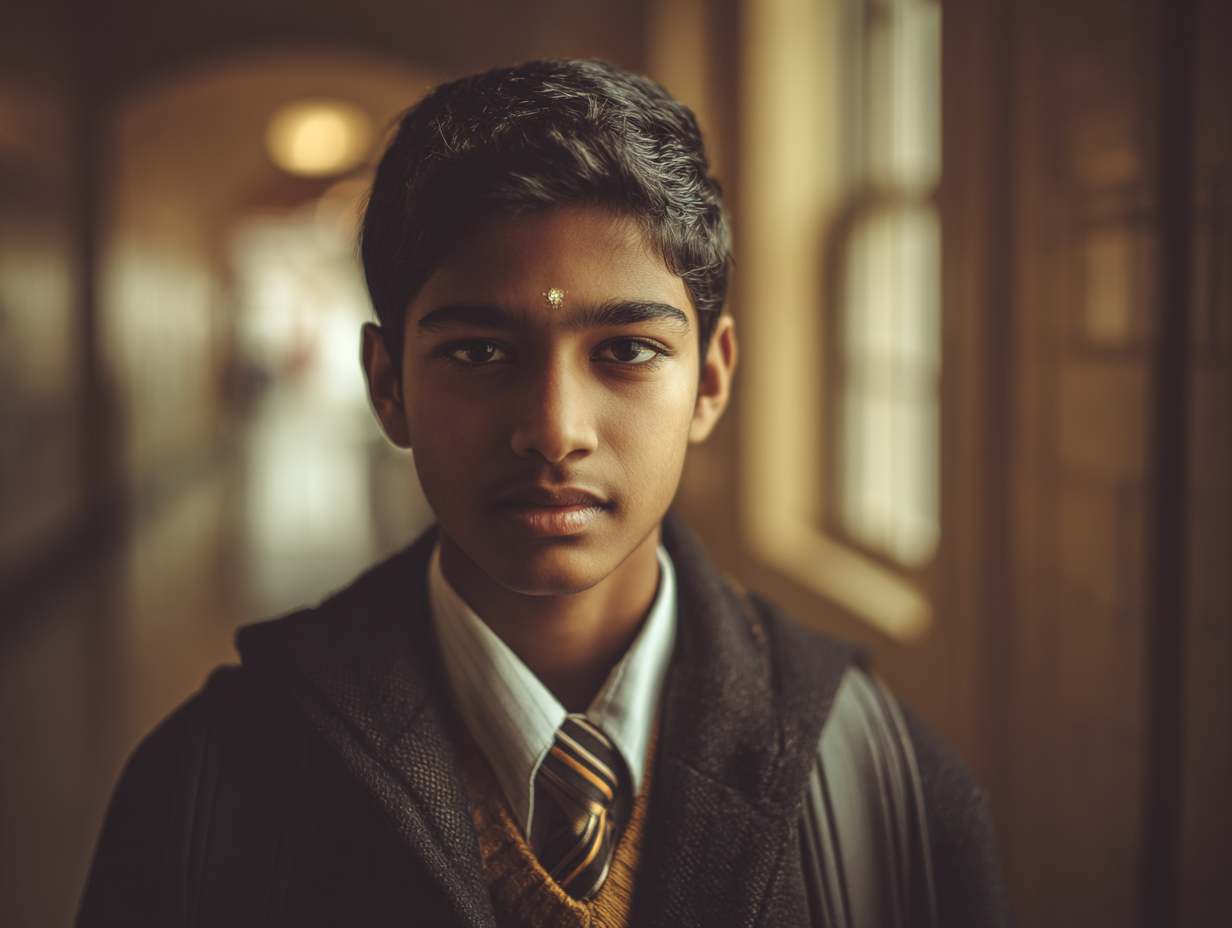
Dignity is the answer — not argument, not retreat.
When mockery happens — and at some point, for many Hindu American children, it does — the worst thing a parent can do is minimize it. "Just ignore them" teaches a child that their faith is something to be endured, not defended. "Get angry" teaches them that their identity is fragile. What you want to teach instead is dignified confidence — the kind that comes from knowing that what is being mocked is actually something extraordinary.
A child who has been raised with Dharmic pride does not crumble under mockery. They feel a kind of calm sadness for the person mocking — because they know something that person does not yet know. That is not arrogance. That is the quiet confidence of someone who has a five-thousand-year tradition standing behind them.
What to say — by age
Ages 6–10
"When someone makes fun of what we believe, it usually means they don't understand it yet. You don't have to fight about it. You can just say 'It's actually really interesting — let me tell you about it sometime.' That's the brave thing to do."
Ages 11–13
"People mock what they don't understand. That's human nature. You don't have to convince anyone or win any argument. You just have to know, in yourself, that what they're mocking is actually ancient, profound, and something to be proud of. Your confidence is the best response."
Ages 14–18
"There is a difference between someone who is genuinely curious and someone who is being cruel. For the cruel — your dignity is your answer, not your words. For the curious — you have one of the most fascinating faith traditions in human history to share. Either way, you are not on the back foot. You are standing on five thousand years of wisdom."
Challenge Five

Dharma is not what you say. It is what you do when no one is watching.
As children grow, the identity questions become less about explaining Hinduism to others and more about living it themselves — in how they treat people, how they handle failure, what they value, what they refuse. This is where Dharma moves from heritage to character. The teenager who treats a struggling classmate with compassion because of ahimsa, who tells the truth in a difficult moment because of satya, who persists through failure because the Gita teaches action without attachment to outcome — that teenager does not need to announce their faith. They live it.
The most powerful Dharmic education you can give your child is not theological. It is behavioral. Show them what a Dharmic life looks like in American contexts — in how you conduct business, treat service workers, vote, volunteer, and speak about people who are not in the room.
What to say — by age
Ages 6–10
"We have a word — ahimsa — that means not hurting anyone, not just with fists but with words. In our family, that is how we treat people. Always."
Ages 11–13
"Dharma isn't just something we do at the puja room. It's how we make decisions every day — about honesty, about how we treat people, about what we stand up for. When you're not sure what to do, ask yourself: what would the Dharmic choice be here?"
Ages 14–18
"The Gita says: do your duty, do it fully, and let go of the outcome. That's not passive — it's one of the most powerful frameworks for decision-making in existence. As you face bigger choices — about integrity, about courage, about what kind of person you want to be — that teaching will serve you more than almost anything else."
"Your child does not need to win every argument about Hinduism. They need to feel, in their bones, that there is nothing to be ashamed of — and everything to be proud of."
Raising Dharmic Americans — full series
Part 3 · Now reading
When your child asks "Am I Hindu?"