
Yoga Is Hindu.
And That's Not Something
We Should Apologize For.
Every time someone says yoga is "just stretching" or "beyond religion," something real is lost. Here's why saying the truth — out loud, without shame — is itself an act of Dharma.
You're at a yoga class in your city. The instructor dims the lights and says, "Let's begin in a comfortable seat. Yoga is a universal practice. It belongs to everyone." And you — the Hindu person in the room whose grandmother did Surya namaskar every morning before the sun was even up — sit quietly and say nothing.
You do have the words. And you're not wrong to feel what you feel.
The Erasure That Doesn't Feel Like Erasure
Yoga — the full, living tradition — is one of the most sophisticated systems of human philosophy, ethics, and spiritual practice ever developed. It comes from the Vedic tradition of ancient Bharat. It is rooted in Hindu texts: the Upanishads, the Yoga Sutras of Patanjali, the Bhagavad Gita, the Hatha Yoga Pradipika. Its purpose, at its core, has always been liberation. Union with the divine. Moksha.
And yet, the version of yoga that generated a $180 billion global industry has, in many corners, been carefully scrubbed of its origins. The Sanskrit mantras survive, but their meaning is rarely explained. Om is printed on every mat, every water bottle, every wall decal — but God forbid we mention that Om is the sound of Brahman, the primordial vibration at the heart of Hindu cosmology.
This is not accidental. And it is not neutral. It is a form of erasure — and the fact that it is usually done cheerfully, with good intentions, does not make it less real.
When we say "yoga is Hindu," we are not saying non-Hindus cannot practice yoga. Of course they can. We are saying: know where it comes from. Honor its roots. Don't erase them. The difference between appreciation and appropriation is acknowledgment.
What Was Actually Taken
Yoga was not always an export product. For thousands of years, it was a living, breathing spiritual practice transmitted from teacher to student, embedded in a complete worldview that included scripture, ethics, community, and devotion to the divine.
Patanjali's Yoga Sutras — written around 400 CE (or even before that per some experts) — describe an eight-limbed path. Physical postures, asana, are the third limb. Before asana comes yama (ethical restraints) and niyama (personal observances). After asana comes pranayama, pratyahara, dharana, dhyana, and finally samadhi — meditative absorption, union with Brahman.
Asana was never the point. It was the preparation. The postures existed to make the body a fit vessel for the real work: the stilling of the mind, the dissolution of ego, the return to one's true nature as pure consciousness.
When yoga is reduced to stretching and stress relief — as good as those things genuinely are — the deepest gift of the tradition is quietly amputated. And Hindu Americans are left watching something sacred turned into a lifestyle brand, with no credit given to the civilization that gave birth to it.
The Personal Sting of It
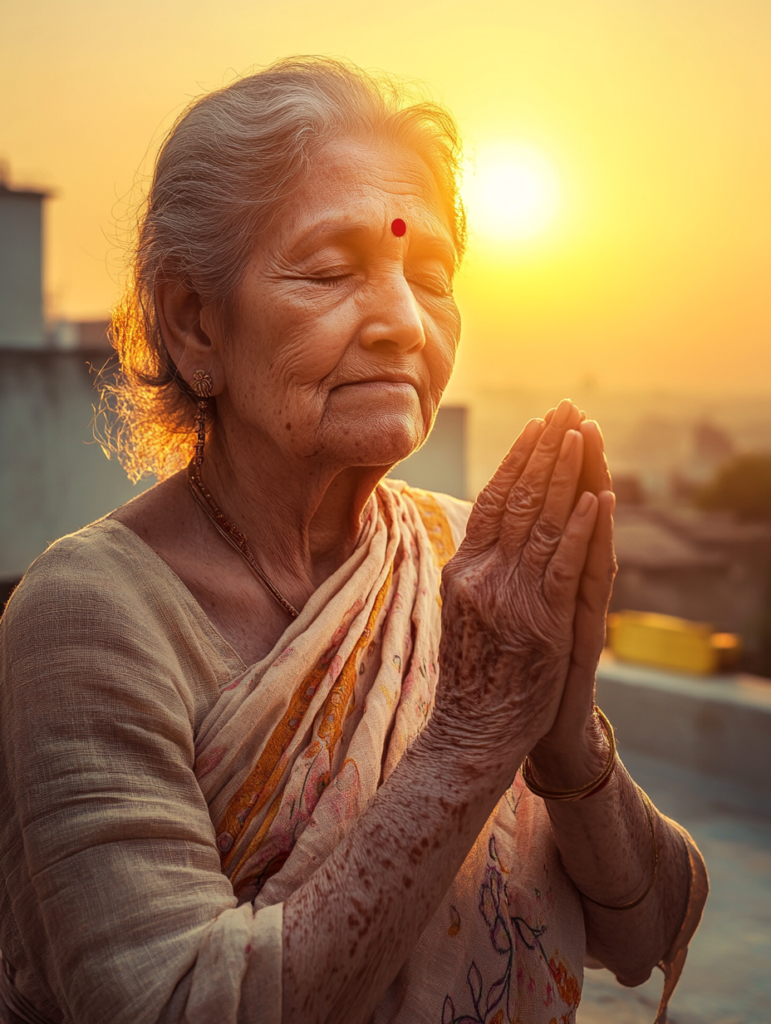
This is not just a theoretical debate about intellectual property or cultural history. For many of us, it is personal in a way that is hard to articulate without sounding oversensitive.
It feels like watching your grandmother's recipes go viral under someone else's name. It feels like seeing the thing your family was mocked for — the incense, the Sanskrit, the "weird" rituals — repackaged as chic and sold back to the culture that once looked down on it. It feels like invisibility with a wellness aesthetic.
There is a deep loneliness in watching the world fall in love with a version of your culture that has had you edited out of it.
Hindu children in America grow up in a complicated space. They may be embarrassed by their tradition at school, only to go home and switch on a TV that celebrates the decontextualized version of that same tradition as enlightened and sophisticated. The cognitive dissonance is real. And it costs something.
But Isn't This Spreading Hindu Ideas? Isn't That Good?
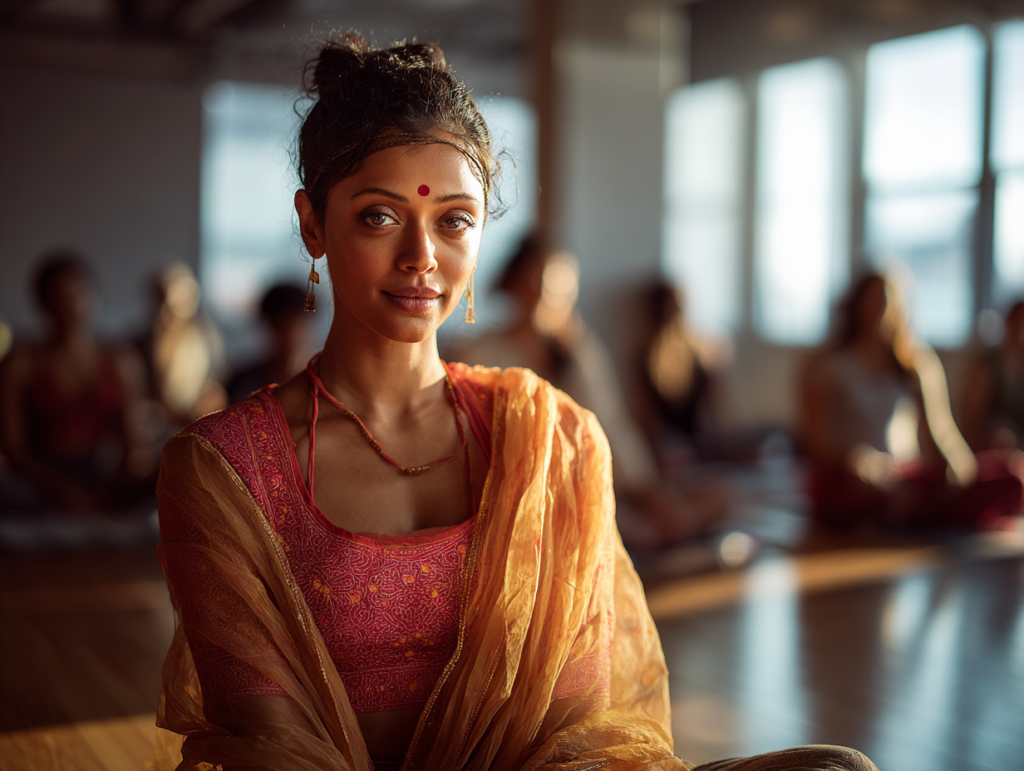
It's a fair question, and a genuinely kind one. Some Hindu thinkers have argued that the spread of yoga — in any form — plants seeds. That someone who begins with Warrior II might one day find their way to the Gita. There is something to this. And we should hold it with real respect.
But we should also be honest about what we observe: that for most people in the West, the yoga-to-Hinduism pipeline runs very cold. And there is a real difference between "yoga is spreading Hindu ideas subtly" and "yoga is being used to generate enormous wealth while the civilization that created it is treated as irrelevant."
We can celebrate sincere practitioners who seek depth while also naming the system that profits from the erasure. Both things can be true.
Reclaiming Is Not the Same as Gatekeeping
When Hindu Americans talk about reclaiming yoga, we are sometimes accused of gatekeeping — of trying to restrict who can practice or benefit from a tradition that has brought genuine good to millions of people worldwide. That is not what reclamation means.
Reclamation means saying: this came from somewhere. It came from a civilization with a name, with living descendants, with communities that still practice this tradition in its full depth. It means insisting that credit be given. It means asking yoga studios and wellness brands to say the words — to name Hinduism, to explain the philosophy, to acknowledge that this is not a practice that arose from nowhere.
That is not gatekeeping. That is basic intellectual honesty. It is the same courtesy we extend to any tradition, any art form, any body of knowledge. We should extend the same to the oldest continuous civilization on earth.
What We Can Do In Our Own Lives, Right Now

That sentence — said with a smile — is an act of Dharma.
The Deeper Reason This Matters
At the heart of the Hindu tradition is the idea of Satya — truth. Not aggressive truth, not weaponized truth, but the gentle, steady refusal to let falsehood stand unchallenged. Mahatma Gandhi called Satya the highest Dharma. The Yoga Sutras themselves list Satya — truthfulness — as one of the five foundational ethical restraints of the yoga path itself.
There is something quietly perfect about that. The very ethical framework of yoga demands that we tell the truth about yoga.
So the next time the question comes up — in a studio, at a dinner party, in a conversation with a well-meaning friend — you have your answer. Not from anger. Not from resentment. But from the deep, unshakeable ground of a tradition that has known who it is for five thousand years.
Yoga is Hindu. It always has been. And the world can practice it, love it, and be transformed by it — while also knowing and honoring that truth. That is not too much to ask.
The tradition that gave the world yoga is alive. Its people are here, practicing, and paying attention. We welcome you to the mat - and we ask only that you know whose mat it is.