
Diwali Beyond the Diya: Teaching Children the Story and Meaning of Diwali
Hindu American children move between a home lit with diyas and a classroom that may not know why. As Vikram Samvat 2082 closes and 2083 begins, here is how to give them the story, the meaning and the confidence to share both.
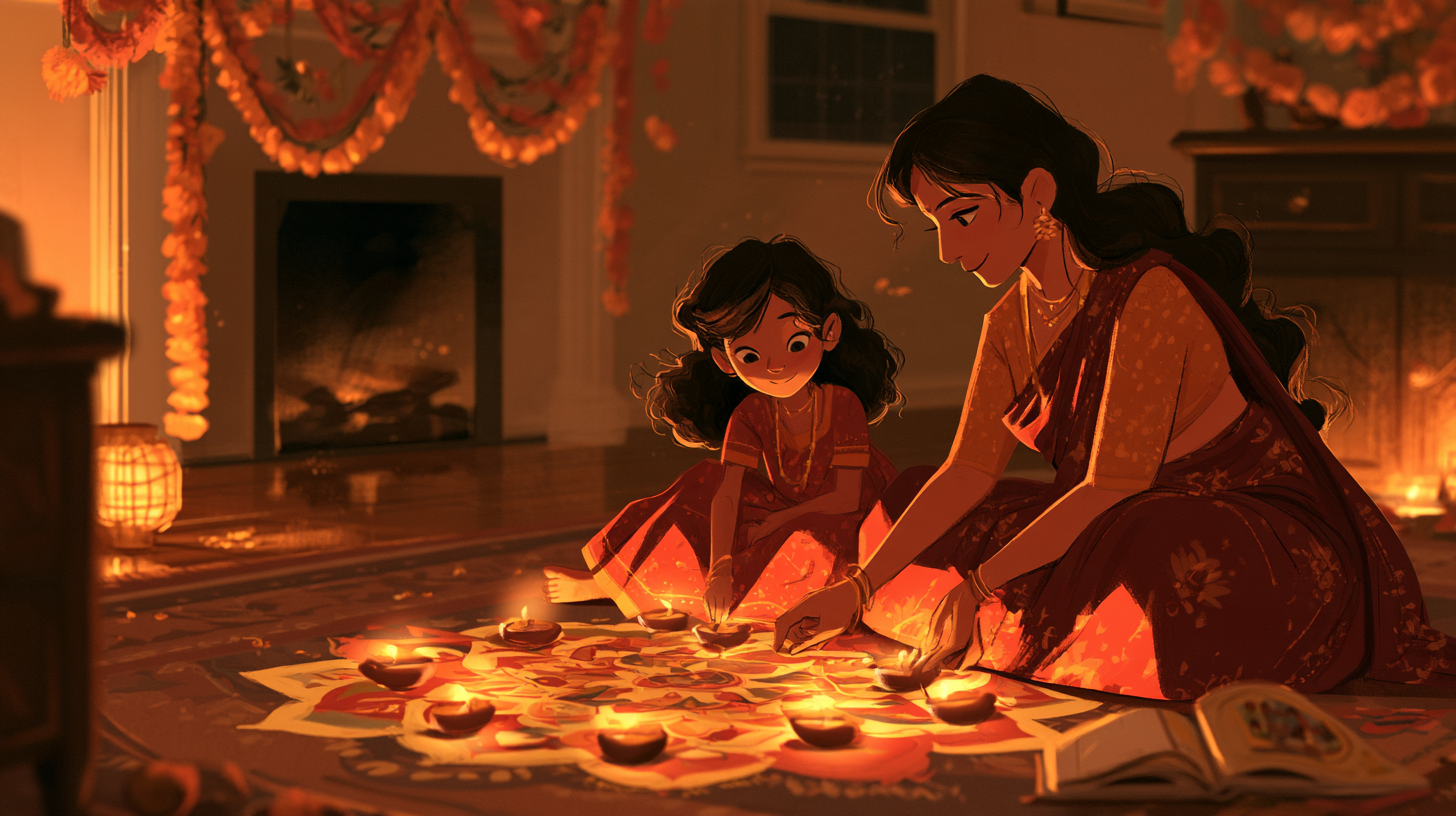
Diwali 2026 falls on Sunday, November 8, the main day of Lakshmi Puja. For many Gujarati families, the festival also marks the turn of the year: Vikram Samvat 2082 ends, and Vikram Samvat 2083 begins on Tuesday, November 10. The school year is already under way, and sooner or later your child will be asked, “What is Diwali?”
Many of us feel torn between the festival we love and the few sentences we can fit into a classroom moment. This guide helps you teach your children the story, the symbols and the values of Diwali. It also helps them explain it in an American classroom, calmly and proudly.
Start With the Word
Diwali comes from the Sanskrit dipavali, meaning “row of lights.” The lights are clay lamps, or diyas, set outside homes during the festival. The Hindu American Foundation (HAF) describes the lamps as a symbol of inner light over spiritual darkness.
Give children this word first. A child who knows that a deepa is a lamp and avali is a row has a handle on the festival. It also makes a good opening line for show-and-tell.
A child who knows why the lamp is lit has already learned the festival.
One Festival, Many Stories
Children often ask, “Which story is the real one?” The honest answer is that several stories live inside one festival, and the one a family tells depends on region and tradition.
- Rama’s return. Many Hindus recognize Diwali as the return of Prince Rama, Sita and Lakshman to Ayodhya after 14 years of exile. HAF notes that Rama is considered an incarnation of Vishnu and an embodiment of dharma, and Sita an incarnation of Lakshmi.
- Krishna and Narakasura. Other Hindus commemorate the day Krishna defeated the demon Narakasura. In some regions, Diwali also coincides with the Hindu New Year.
- Lakshmi’s blessing. The main night is devoted to prayers to Goddess Lakshmi, along with Lord Ganesha, the blesser of new beginnings.
- Krishna and Govardhan. A later day recalls Krishna lifting Govardhan Hill to protect the villagers of Vrindavan.
For a short telling, the Rama story works best. Rama, Sita and Lakshmana went into exile. Ravana kidnapped Sita, and Rama, with Hanuman and his allies, rescued her. When they returned, the people of Ayodhya lit rows of lamps to welcome them home.
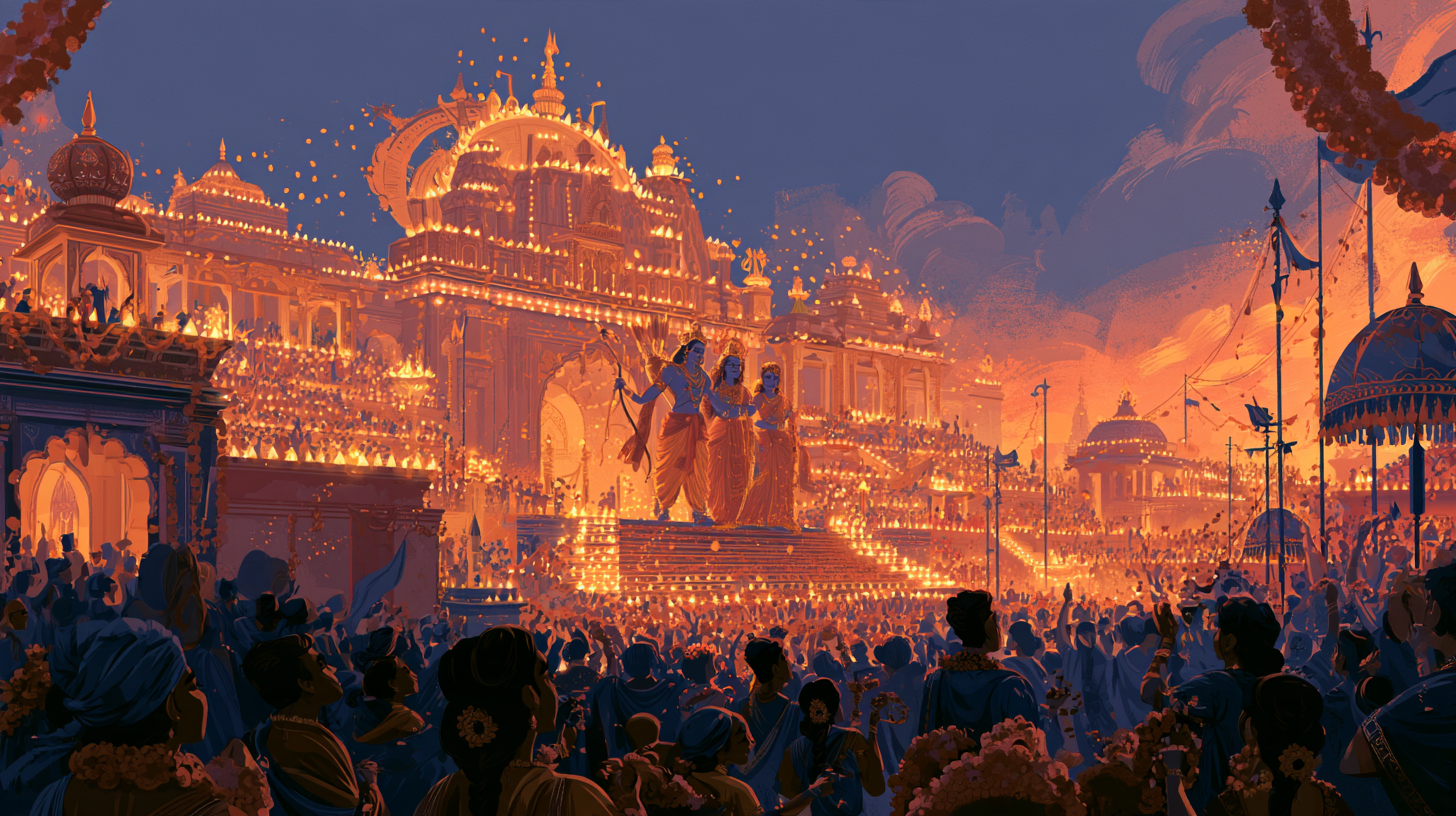
The variety is a strength. It shows children that Hindu tradition holds regional memory, family custom and shared values together. It also prepares them for the classmate who says, “My friend’s family tells it differently.”
The Days of Diwali, Kid-Friendly
Diwali spans several days, so you can teach it across the week instead of in one evening. HAF’s 2026 guide lists six days. CoHNA notes that many Hindus observe five, and that practice varies by region and community. Use the count that matches your family’s tradition, and confirm exact dates with HAF or your temple calendar, because lunar calculations differ between calendars.
| Day | Name (per HAF) | Kid-friendly idea | Family activity |
|---|---|---|---|
| 1 | Govatsa Dvadashi & Vasu Baras | Care for cows and calves | Read a short story about kindness to animals |
| 2 | Dhanteras & Dhanvantari Trayodashi | A clean home and a generous heart | Clean one space together and choose something to donate |
| 3 | Naraka Chaturdashi & Choti Diwali | Light beats darkness | Light the first diyas and tell the Krishna story |
| 4 | Main day of Diwali | Gratitude and blessings | Family puja, rangoli and sweets |
| 5 | Govardhan Puja & Annakuta | Thanks for food and nature | Share a meal and talk about thankfulness |
| 6 | Bhai Beej & Yama Dvitiya | Sibling love | Siblings write each other a note |
| New Year | Bestu Varas (Gujarati) | A fresh start | Share one goal for the year ahead |
HAF ties Dhanteras to dana (giving) and seva (selfless service). It describes the deep cleaning of the home, believed to invite Lakshmi’s blessing, and the making of rangoli to welcome auspiciousness. That makes Dhanteras a natural day to start the habit of service.
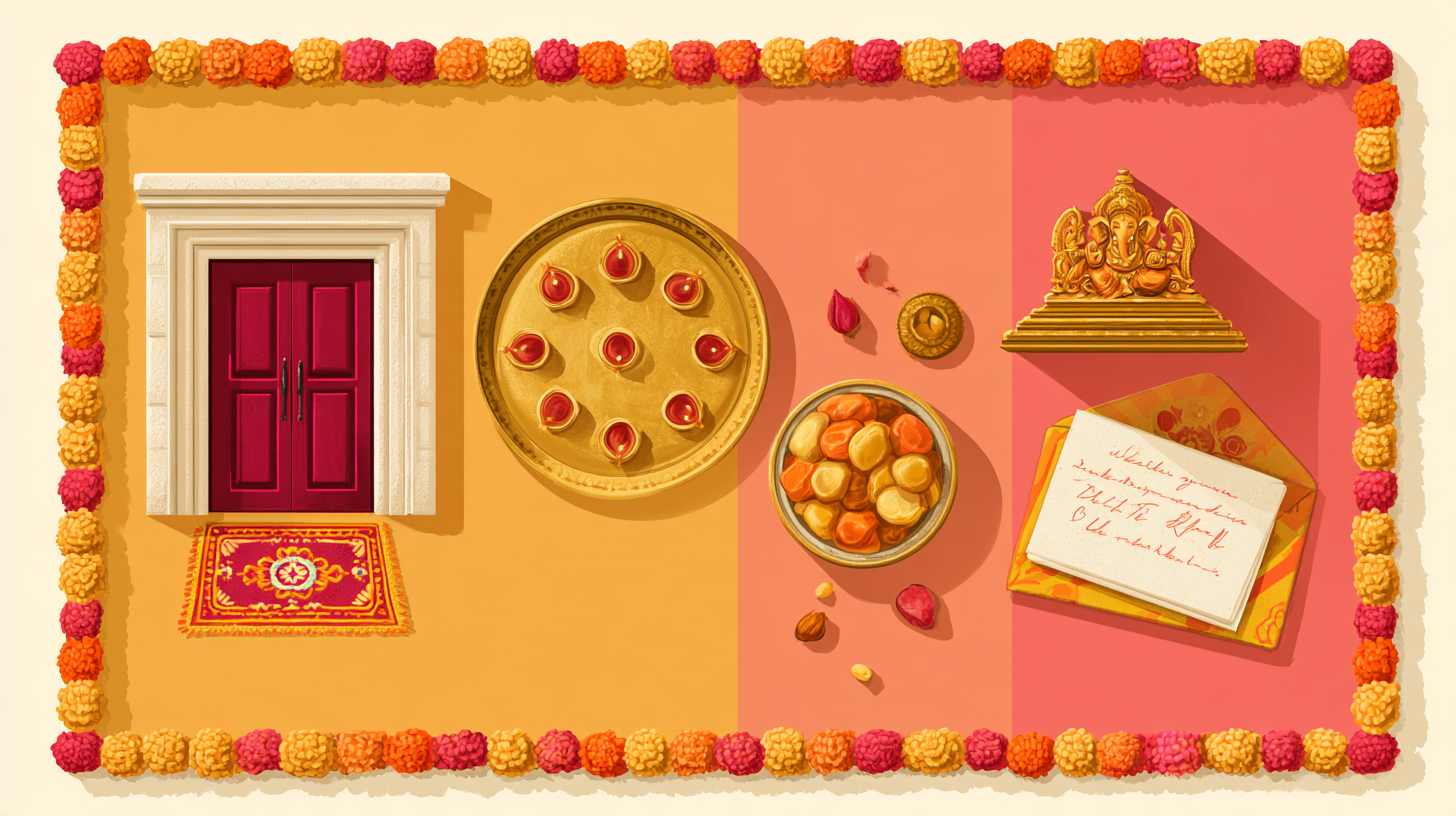
A New Year Begins: Vikram Samvat 2083
For many Hindu families, Diwali is also the end of one year and the start of the next. In Gujarat, Diwali traditionally closes the old year, and Bestu Varas ushers in the new one.
This year, the Gujarati calendar moves from Vikram Samvat 2082 to 2083. Vikram Samvat 2082 has run since Bestu Varas on October 22, 2025, and 2083 begins on Tuesday, November 10, 2026. That is two days after the main Diwali day. The Pratipada tithi begins at 12:31 PM on November 9 and ends at about 2:00 PM on November 10, so the new year is observed on the 10th. Tithi timing can differ by location, so families should confirm the date with their temple or a local panchang.
Not every Hindu family begins the year in the fall. In many parts of northern India the year starts in Chaitra, in spring, and Vikram Samvat 2083 began there on March 19, 2026. Both traditions count the same era and differ only in where the year begins. You can tell your child that both are correct. The Vikram Samvat calendar runs about 57 years ahead of the Gregorian one.
Teaching by Age
Ages are only a guide, so adjust to your child.
Ages 3–6: Sensory and simple. Keep the story to three sentences and use pictures. Let them arrange diyas, help with rangoli and taste prasad. Repeat one line each night: “Light is stronger than dark.”
Ages 7–10: Story and symbol. Read a children’s Ramayana together. Ask how the people of Ayodhya felt and why they lit lamps. Introduce the idea that darkness can be inside us too, in the form of anger, greed or laziness.
Ages 11–14: Questions and context. Preteens want the “why,” and they may be wary of standing out. Explain the regional stories and how the lunar calendar sets the dates. Practice a 60-second explanation they can give a friend, then let them choose how much to share.
Teens: Ownership. Give them real roles, such as leading a family puja, organizing a temple food drive or presenting at school.
Bringing Diwali Into the School Year
An American classroom is a good place for Diwali, but a little preparation helps.
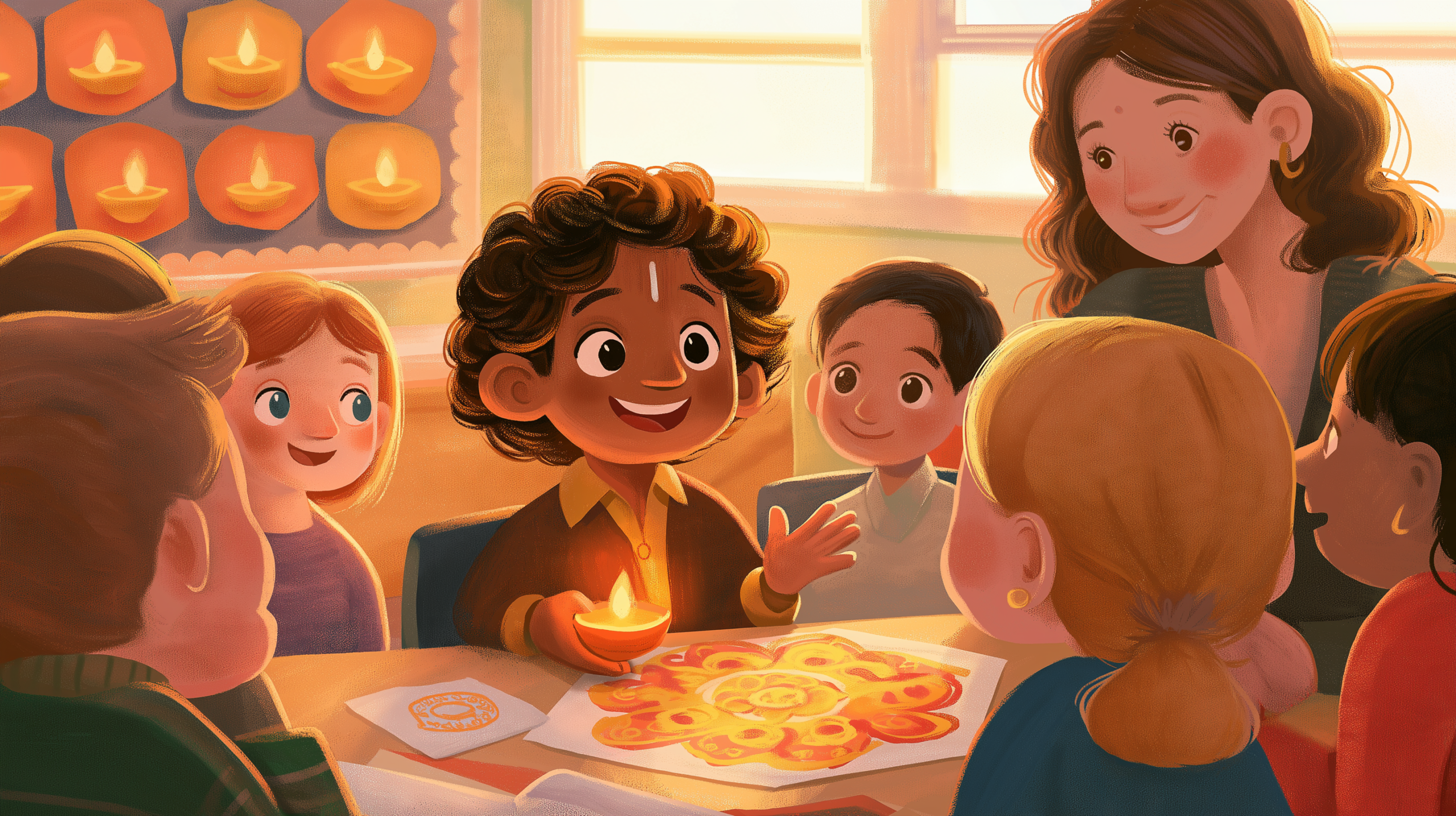
- Talk to the teacher early. Offer a short, accurate description instead of waiting for a worksheet. Offer to visit, or to lend a picture book, a diya or a rangoli stencil.
- Use the right framing. Diwali is celebrated by Hindus, Jains, Sikhs, Buddhists and people of many backgrounds. Each tradition has its own legends, but the shared symbolism is light over darkness, knowledge over ignorance and good over evil. It is also an official holiday in more than 13 countries. Let it stand on its own instead of comparing it to another religion’s holiday.
- Prepare a one-minute script. For example: “Diwali is the festival of lights. We light diyas to remember that light is stronger than darkness. We clean our homes, share sweets and give thanks.”
- Plan for absences. School calendars vary. In different states, local boards of education decide school holiday dates when federal and state observances differ. Diwali is not a state school holiday, so check your own district’s calendar and request an excused absence if you need one.
- Pack a kit. Include battery-operated diyas, since many schools do not allow open flames, plus rangoli paper, a short picture book and sealed sweets. Check the school’s food and allergy rules first.
Free Tools for Parents and Teachers
HAF’s 2026 download has two parts. The Diwali Toolkit covers the who, what, when, why and how of the festival, walks through the days and retells the story of the exiled prince’s return. The Activities Packet adds a word search, a maze, a coloring page and a draw-your-own-rangoli activity. Both arrive in one free PDF from the Hindu American Foundation.
CoHNA offers a short, fun presentation on what Diwali is, how it is celebrated and when. It is aimed at parents explaining the festival to kids, co-workers or neighbors. Watch it with your child before a class presentation.
HAF also links to practical guides for a home puja (express, short or full), a template for requesting time off from your employer, and a proclamation template for asking your town to recognize Diwali.
When Questions Get Tough
A classmate may say, “That’s just a myth,” or “Isn’t that about fireworks?” Teach your child a calm, curious reply: “It’s a story that’s very important to my family. Do you want to hear it?” Role-play it at the dinner table.
If a textbook, worksheet or comment crosses into stereotype or disrespect, note it factually and bring it to the teacher or principal. Keep the tone constructive. The aim is correction and understanding, not conflict. As we wrote in our earlier Diwali piece, children who understand the meaning behind a practice are better prepared to meet ignorance with confidence rather than shame.
From Lights to Service
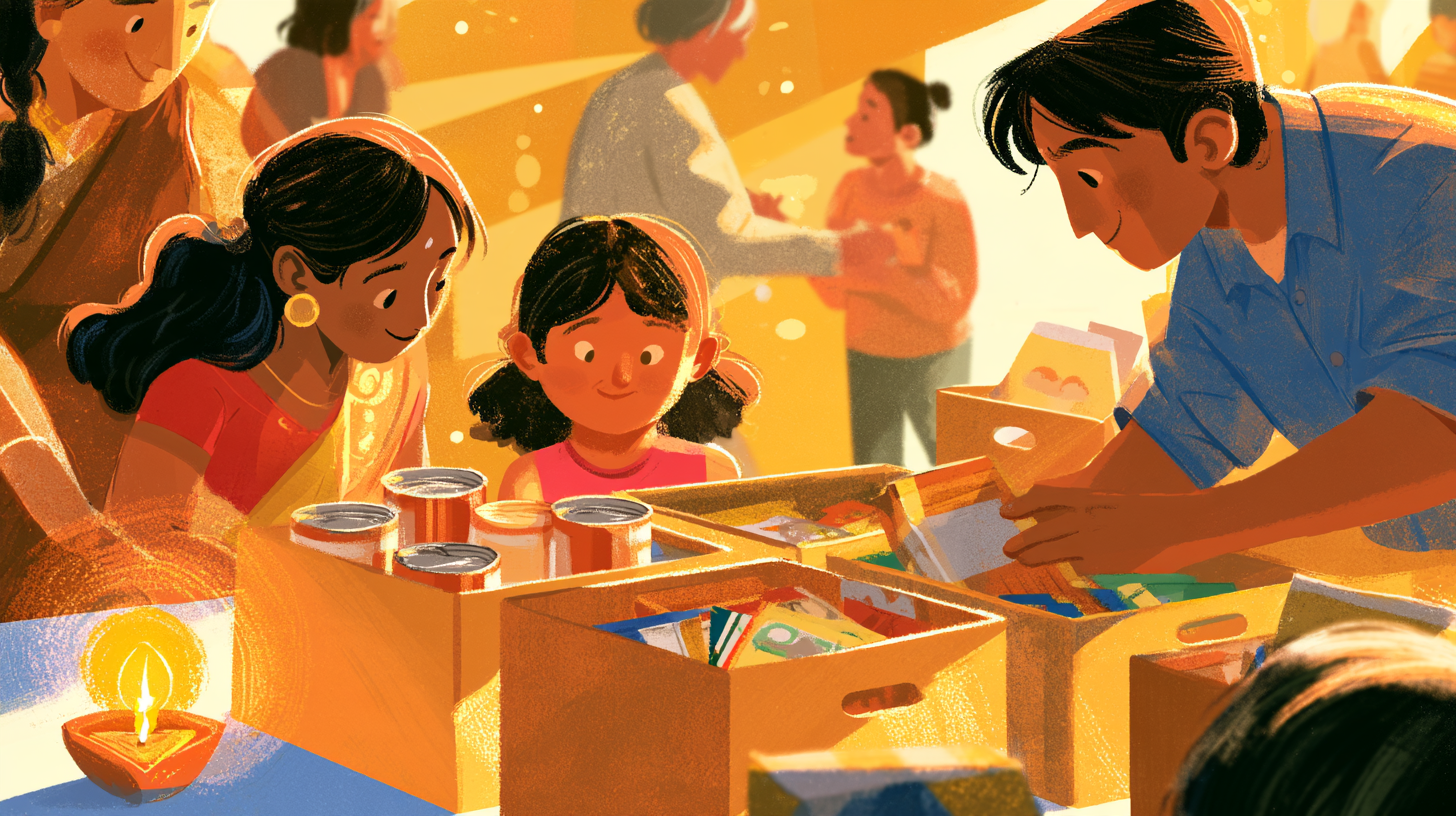
The last lesson of Diwali is that light is meant to be shared. Make it concrete:
- Name one person each evening whose day you could brighten.
- Collect canned food or school supplies before the holiday.
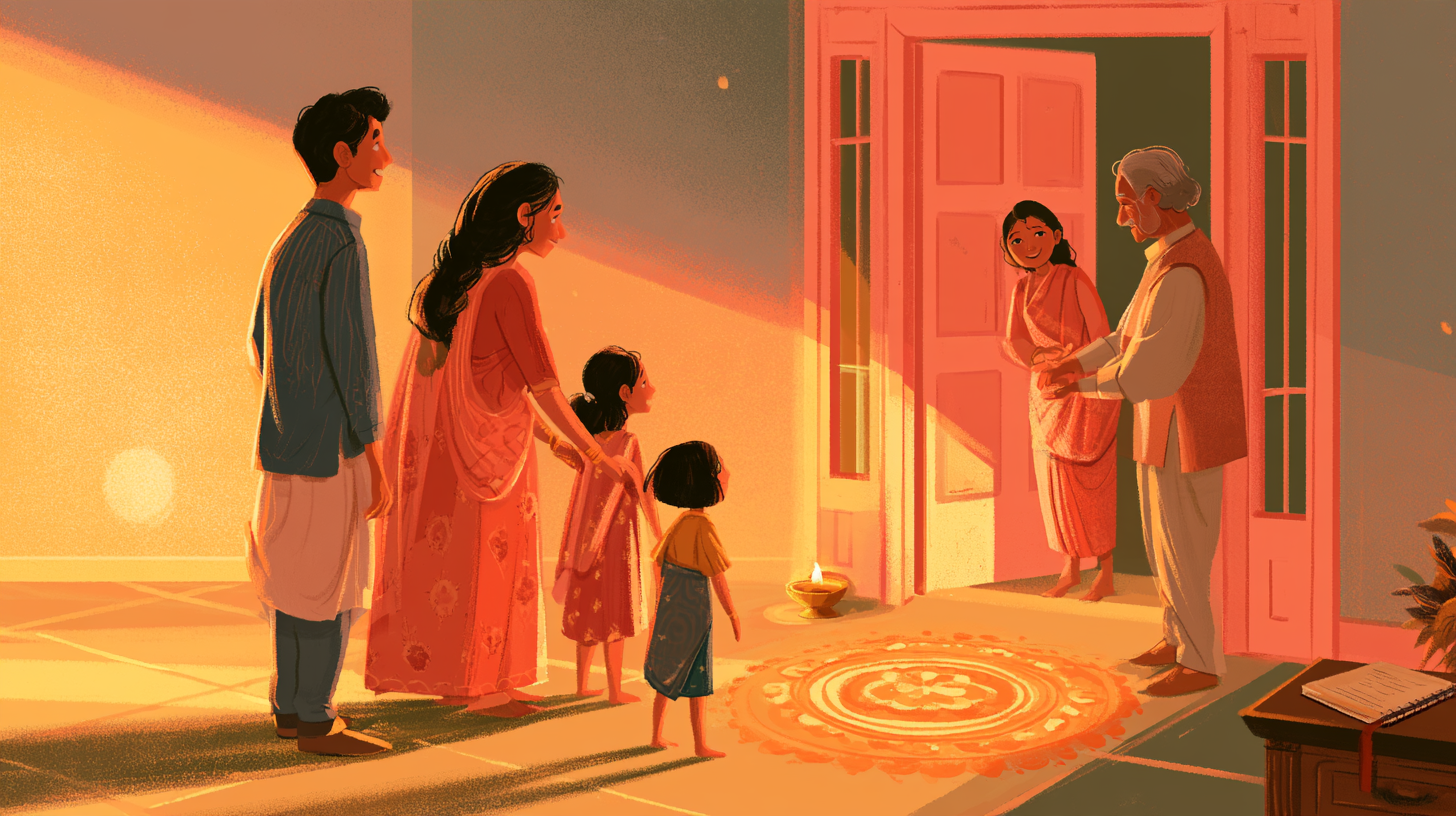
- Invite a neighbor or classmate to see your rangoli and share sweets.
The Light They Carry
Children do not need to master every version of the story. They need the word, a story they love, a value they can name, and a new year to step into with a family that welcomes their questions. If they leave Diwali knowing why the lamp is lit, you have taught the festival.
A diya does not deny the darkness.
It chooses to shine within it.