
The Hindu American Story:
Vivekananda to Silicon Valley
From a standing ovation in Chicago in 1893 to three million Americans carrying Dharma into every corner of this nation — this is the story of how Hindu America was built.
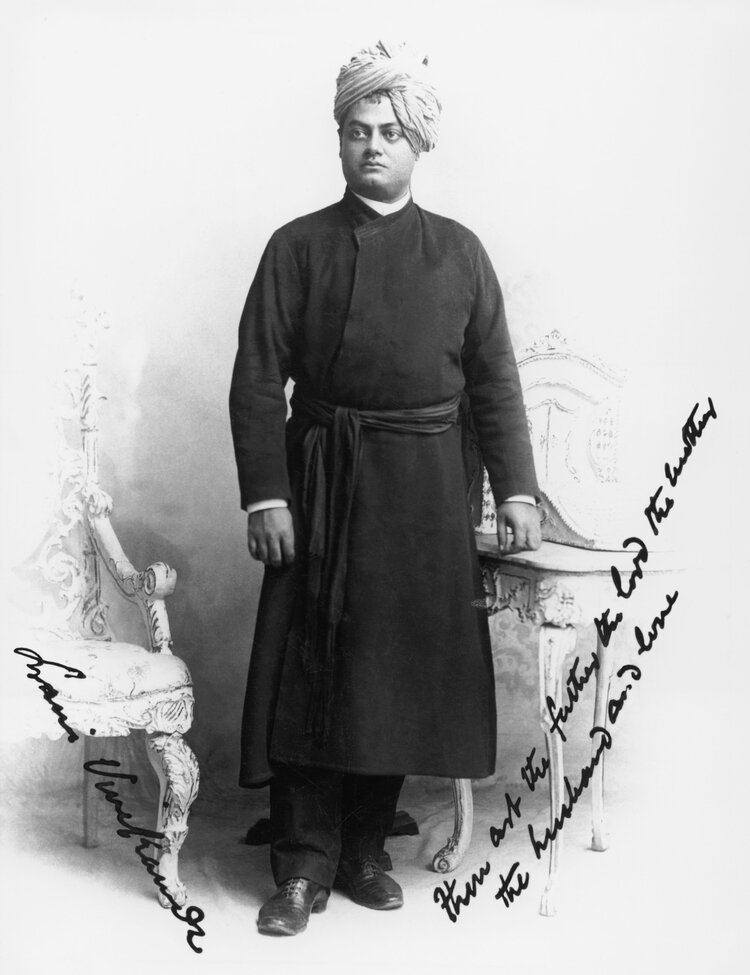
"Sisters and brothers of America"
— and seven thousand people rose to their feet for two full minutes, before he had said anything else.
Swami Vivekananda · Parliament of the World's Religions · ChicagoOn the morning of September 11, 1893, a young Hindu monk from Calcutta stepped onto a stage at the Art Institute of Chicago and changed the course of religious history in America. He was thirty years old. He had traveled across the ocean largely alone, arriving without credentials or connections, nearly turned away from the Parliament of the World's Religions for lack of proper papers.
What followed was a speech that introduced Hinduism to America — its pluralism, its depth, its refusal to condemn. He spoke of a religion that had sheltered the persecuted of every faith, that taught the world both tolerance and universal acceptance, that saw all paths as ultimately leading to the same divine truth. America had never heard anything quite like it.
Read his historic 1893 address in full
Swami Vivekananda and His 1893 Speech · The Art Institute of Chicago →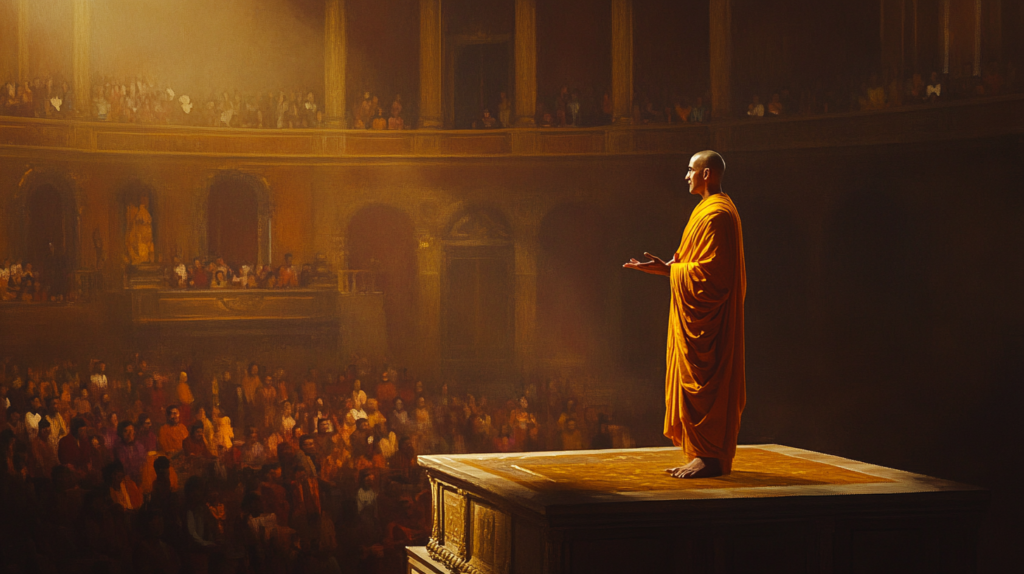
That morning in Chicago was the beginning of the Hindu American story. And 130 years later, that story is still unfolding — in temples and universities, in hospitals and Congress, in family kitchens and school hallways, in the hearts of millions of Americans who carry Dharma with them into every corner of this nation.
The First Arrivals — Before 1965
The popular narrative of Hindu Americans begins with 1965. But the truth goes back further. People from the Indian Subcontinent began arriving in the United States as early as 1820. In the early decades of the twentieth century, Indian workers from the Punjab region settled primarily in California to work in agriculture, lumber, and railroad construction. These were not doctors or engineers — they were laborers, many of them Sikh, who carved out lives in the American West with their hands and their determination.
Their road was hard. Indian and other non-European immigrants faced growing political opposition through the late 19th and early 20th centuries, culminating in restrictions such as the Immigration Act of 1917. For decades, Hindu and Indian immigrants existed at the margins of American law — unable to become citizens, unable to own land in many states.
And yet they stayed. They built communities. They practiced their faith quietly, keeping Dharma alive across the Pacific. Swami Vivekananda's 1893 visit planted a different kind of seed — not of immigration, but of ideas. The Vedanta Society he founded kept Hinduism intellectually alive in the American consciousness for decades — long before mass immigration made it demographically visible.
How Hindu America Was Built — A Timeline
Vivekananda Speaks in Chicago
The Parliament of the World's Religions. A two-minute standing ovation. The first introduction of Hindu philosophy to America — pluralism, Vedanta, and the idea that all paths lead to the same truth. The seed of a civilization is planted.
The Immigration Act Shuts Out India
The Barred Zone Act effectively bans immigration from most of the Asia-Pacific region. Indian and Hindu Americans are pushed to the margins — unable to become citizens or own land in many states. And yet they stay, and quietly keep Dharma alive.
The Immigration and Nationality Act
Everything changes. Racial quotas abolished. Skilled workers welcomed. From 1,850 Indian immigrants in the entire 1950s to 590,464 in the 2000s alone. Doctors, engineers, scientists — among the most educated immigrants in American history — arrive in waves. With them: their faith.
Puja in the Suburbs — Building the First Institutions
Living rooms become prayer rooms. Church basements borrowed for Sanskrit classes. BAPS Swaminarayan Sanstha established in New York City in 1971. The Vishwa Hindu Parishad of America founded to coordinate Hindu cultural life. The first mandirs begin to rise.
Sewa International Founded in Houston
The community's deep tradition of selfless service finds its organized form. Sewa International is founded to channel Hindu American seva into disaster relief, education, and community development — a movement that will grow to 43 chapters across the country.
The Technology Wave
A new generation arrives in Silicon Valley. Names that would become synonymous with American technological leadership — Satya Nadella at Microsoft, Sundar Pichai at Google, Shantanu Narayen at Adobe — carry both American ambition and Dharmic values into the boardrooms of the world's most powerful companies.
Hindu American Foundation Established
A community voice in public life and policy. HAF begins the work of textbook accuracy, civil rights, interfaith dialogue, and Hindu representation in civic life — the institutional expression of a community that has earned its place and intends to be heard.
BAPS Akshardham Opens in Robbinsville, NJ
12,500 volunteers. 12 years. 68,000 cubic feet of Italian Carrara marble. The second-largest Hindu temple in the world opens in New Jersey — and with it, a declaration that Hindu America is not passing through. It is home.
Who Hindu Americans Are Today
Today, the Hindu American story has reached a scale that Swami Vivekananda could not have imagined from that Chicago stage in 1893. The Hindu American population is estimated to be around three million, or approximately one percent of the U.S. population, making Hindu Dharma the nation's fourth-largest faith.
According to the Pew Research Center's 2023–24 Religious Landscape Study, Hindus are the most highly educated religious group in the country. Seven in ten Hindus hold a bachelor's degree or higher, compared to 35 percent of US adults overall. Hindu Americans boast a median household income of approximately $126,000, surpassing other ethnic groups.
These numbers are not just statistics. They are the fruit of a specific set of values — the Dharmic emphasis on education as sacred duty, on knowledge as the path to both material and spiritual liberation, on discipline, perseverance, and service. Vidya — learning — has always been among the highest callings in Sanatana Dharma.
Hindu Americans serve as physicians, researchers, hospital administrators, and public health leaders across every state — strengthening the American healthcare system from within.
Satya Nadella. Sundar Pichai. Shantanu Narayen. Hindu Americans have founded and led companies that define the digital age — carrying Dharmic values into the boardrooms of the world.
From MIT to Stanford, Hindu American scholars have expanded human knowledge in science, engineering, economics, and the humanities — the 5,000-year tradition of vidya made new.
From Tulsi Gabbard to Vivek Ramaswamy, openly Hindu voices have entered American political life — still rare, still path-breaking, and marking another chapter in the journey from margins to mainstream.
The Second Generation — A New American Identity
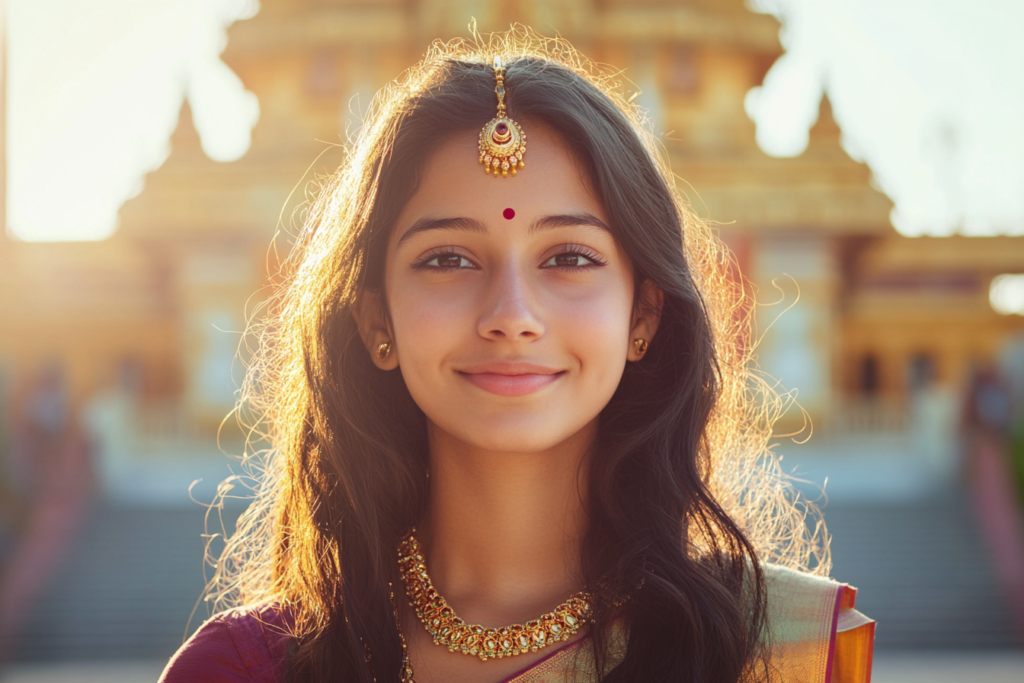
The sons and daughters of the first and second wave of Hindu American immigrants are now adults — raising their own families, building their own careers, navigating their own relationship with a heritage that was given to them but must be chosen anew by each generation.
These are young people who grew up celebrating Diwali and Thanksgiving in the same week. Who learned Sanskrit shlokas and American history simultaneously. Many have spoken about the pressure to assimilate — to anglicize their names, to downplay their religion, to set aside what felt "too Indian" in the pursuit of acceptance.
But something has shifted. A new generation of Hindu Americans is claiming their identity with a pride and confidence that their parents' generation often could not afford. They are starting blogs and podcasts about Dharmic life. They are running for public office as openly Hindu candidates. They are pushing back — with facts, with dignity, with knowledge — when their faith is misrepresented or misunderstood.
They are fulfilling the work that Swami Vivekananda began in Chicago in 1893. Not by converting America to Hinduism — but by demonstrating, through their lives, what a Dharmic human being looks like in a free, pluralistic, modern society.
The Temples of a People's Soul
No account of the Hindu American story is complete without the temples. In every city and suburb where Hindu Americans have settled, they have built mandirs — not as a luxury, but as a necessity. The mandir is a community center, a school, a cultural anchor, a place where children encounter their heritage as a living, breathing, singing reality.
Hindu temples in the United States have grown from 435 to over 1,000 in just twenty years.
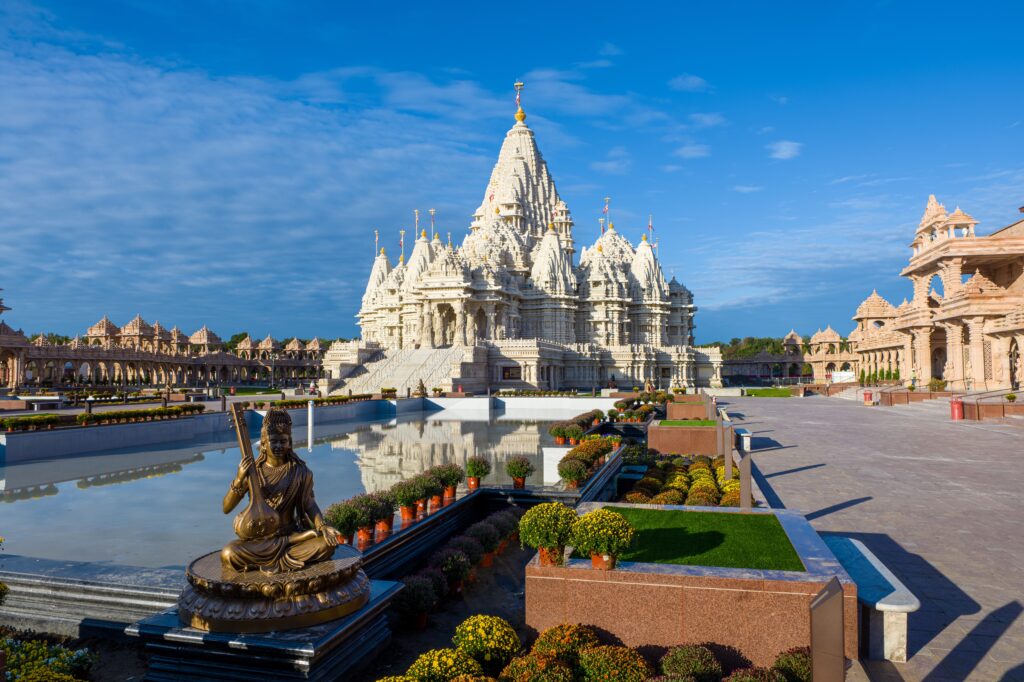
From the magnificent BAPS Swaminarayan Akshardham in Robbinsville, New Jersey to the neighborhood mandir built by a small community in the American heartland, each temple is a declaration of permanence.
We are not passing through. We are home.
What Dharma Brings to America
It is worth pausing to ask — not what America has given to Hindu Americans, though the answer to that question is profound — but what Hindu Americans have given to America.
Hindu Americans bring a worldview that America rarely encounters from within its own traditions. A tradition that sees the divine in every human being — regardless of faith, race, or background. A philosophy that holds non-violence not as weakness but as the highest strength. An understanding of karma that grounds accountability in the self rather than in external authority. A vision of time as cyclical and vast that offers perspective on the anxieties of the present moment.
These are not exotic ideas. They are ancient wisdom that has survived for millennia because it works — because it helps human beings live with integrity, purpose, and peace. America, at its best, has always been a nation that absorbs wisdom from every corner of the world and makes it its own. The Hindu American community is one of the most remarkable chapters in that ongoing story.
Swami Vivekananda stood on a stage in Chicago and told America: "I am proud to belong to a religion which has taught the world both tolerance and universal acceptance."
They are Hindu. They are American. And they are here to stay. 🙏